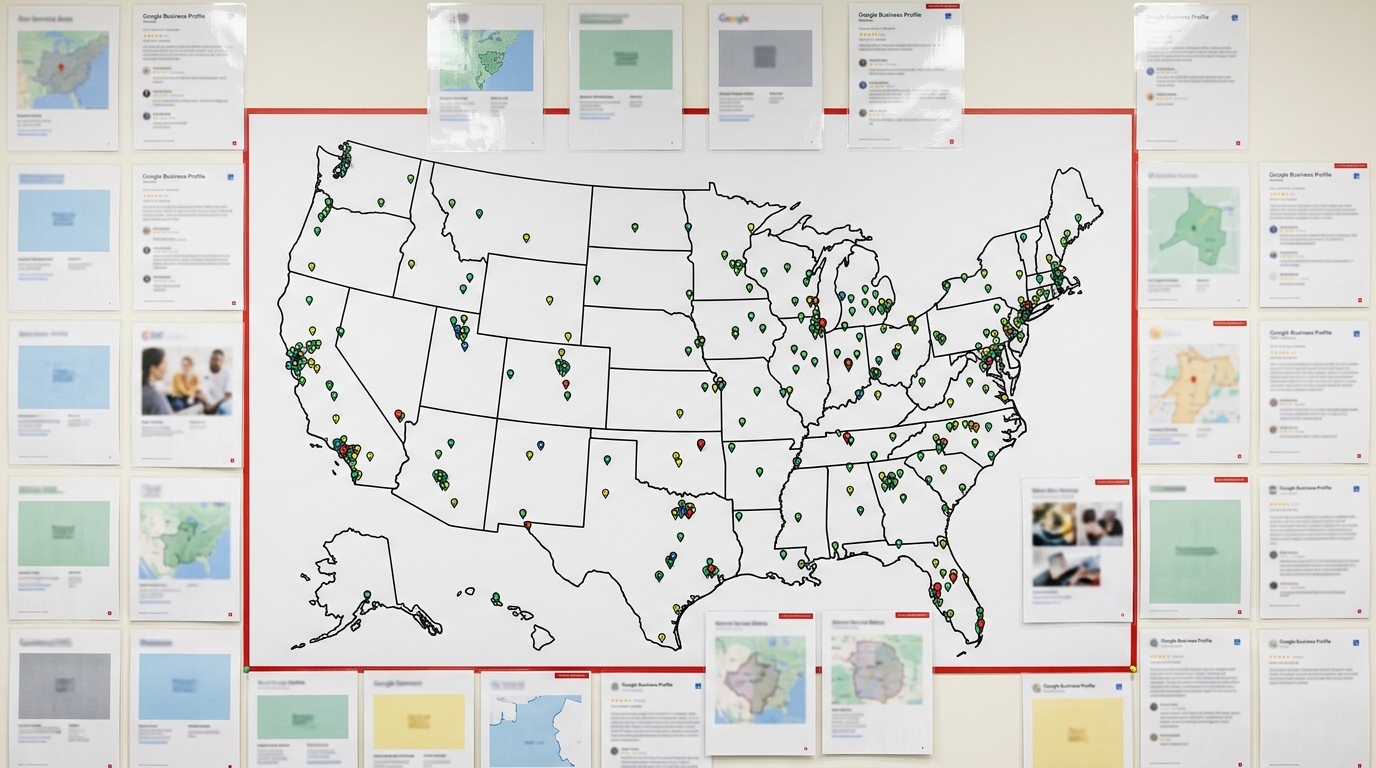
Franchise SEO for home services is the specialized practice of optimizing the online presence of a multi-location brand and its individual franchisees to dominate local search results. This strategy requires a dual-focus approach: establishing brand-level authority and driving lead generation at the local franchisee level through targeted tactics like Google Business Profile optimization, localized content creation, and reputation management across all service areas.
Why Home Service Franchises Need a Unique SEO Strategy in 2026
Unlike a single-location contractor, a home service franchise operates on two distinct battlefronts: the national brand level and the hyperlocal franchisee level. A generic digital marketing approach fails because it cannot simultaneously build brand equity for the franchisor and generate immediate, qualified leads for the individual plumber, electrician, or HVAC technician in their specific service area. The stakes are higher, the complexity is greater, and the potential for explosive growth is immense when executed correctly.
The core challenge is balancing brand consistency with local relevance. The franchisor needs every location - from Miami to Seattle - to reflect the core brand values, service standards, and messaging. However, a customer in Miami searching for "AC repair near me" needs to see content, reviews, and offers relevant to South Florida's climate and community, not generic content from corporate headquarters. This is where a specialized franchise SEO strategy becomes non-negotiable.
In 2026, Google's algorithm, powered by advancements like the Multitask Unified Model (MUM) and AI-driven Search Generative Experience (SGE), places an unprecedented emphasis on hyperlocal signals. It analyzes proximity, local user reviews, service-area-specific content, and entity authority. For a home service franchise, this means each franchisee's digital footprint - their Google Business Profile (GBP), their local landing page, their citations, and their reviews - is a critical ranking factor. A weak link in one territory can dilute the brand's overall authority, while a strong, optimized local presence can create a flywheel of leads and revenue for that franchisee.
Effective franchise marketing for contractors goes beyond simple directory listings. It involves a sophisticated architecture of corporate websites, franchisee microsites or location pages, and a centralized strategy for managing reputation and local business data. Without this structure, franchisees often compete against each other for keywords, create brand confusion with inconsistent messaging, and fail to leverage the collective power of the national brand.
The Foundational Structure: Corporate Site vs. Franchisee Pages
The digital architecture of a home service franchise is the bedrock of its SEO success. A poorly structured website creates internal keyword competition, confuses search engines, and delivers a frustrating user experience. The optimal model is a "hub and spoke" approach, with the corporate website as the central hub and individual franchisee pages as the powerful, localized spokes.
The Role of the Corporate "Hub" Site
The main corporate website (e.g., `yourbrand.com`) serves as the authority anchor for the entire franchise system. Its primary functions are:
- Brand Authority: It houses high-level content about the company's history, mission, values, and national standards. This is where you target broad, high-volume keywords like "plumbing services" or "HVAC installation."
- Franchise Development: It’s the primary tool for attracting and converting new franchisees.
- Centralized Resources: It hosts blog content, service guides, and resources that can be syndicated or linked to from franchisee pages, efficiently distributing SEO authority.
- The "Store Locator": This is arguably the most critical SEO feature. An interactive, well-structured locator helps users find their nearest franchisee and signals the brand's national scope to Google.
The Power of Local "Spoke" Pages
Each franchisee must have a dedicated, indexable page on the main corporate domain (e.g., `yourbrand.com/location/city-state/`). These pages are not just contact cards; they are conversion-focused local marketing assets. Using subdomains (`city.yourbrand.com`) is a less effective strategy as it can dilute link equity, while microsites (`yourbrandcity.com`) are an SEO disaster, creating brand fragmentation and internal competition.
Essential Elements of a High-Converting Franchisee Location Page:
- Unique Local Content: Avoid boilerplate copy. The page must discuss services within the context of the local area. A roofing franchisee in Denver should mention hail damage and heavy snow loads, while one in Phoenix should discuss heat-resistant materials and monsoon season preparedness.
- Schema Markup: Implement `LocalBusiness` schema with precise details: Name, Address, Phone Number (NAP), opening hours, and service area geo-coordinates. This gives search engines structured data to use in the Map Pack and local results.
- Embedded Google Map: An embedded map of the specific Google Business Profile location provides a strong local signal.
- Local Testimonials: Display reviews from customers in that specific service area. Platforms that can filter reviews by location are invaluable here.
- Click-to-Call and Lead Forms: Make it effortless for a mobile user to connect. The phone number and form should be tagged to attribute leads directly to the franchisee.
- Photos of the Local Team & Work: Authentic images of the local crew, their trucks, and completed jobs build trust and local identity far more effectively than stock photos.
Optimizing Google Business Profile for Every Franchise Location
For any home service business, the Google Business Profile (GBP) is the single most important local marketing tool. For a franchise, managing GBP at scale is the key to dominating the coveted Google Map Pack, which is where the majority of ready-to-buy customers look first.
A centralized management strategy is crucial. The franchisor should maintain ownership-level access to all franchisee GBP listings to enforce brand standards, while granting franchisees manager-level access to handle day-to-day interactions like responding to reviews and posting updates.
GBP Optimization Checklist for Home Service Franchisees:
- Consistent NAP: The Name, Address, and Phone Number must be 100% consistent across the GBP listing, the corresponding website location page, and all major directories (Yelp, Angi, etc.). Any variation confuses Google and hurts rankings.
- Primary Category: Select the most accurate primary category (e.g., "Plumber," "HVAC Contractor," "Electrician"). This has the biggest impact on which searches you appear for.
- Secondary Categories: Use all relevant secondary categories to capture long-tail searches (e.g., "Water heater installation," "Drain cleaning service," "Air conditioning repair service").
- Service Area Definition: For Service Area Businesses (SABs) that travel to the customer, define the service area precisely by zip code, city, or county. Avoid over-extending the radius, as this dilutes relevance. Google prioritizes proximity.
- Services Menu: Detail every single service offered with descriptions. A user searching for "tankless water heater repair" is more likely to see a profile that explicitly lists this service.
- Google Posts: Regularly use Google Posts to announce special offers, highlight a specific service, or share photos of recent work. These posts appear directly in your profile and signal to Google that the listing is active and relevant. A 2026 best practice is to create a new post at least once every 7–10 days.
- Q&A Section: Proactively populate the Questions & Answers section with common customer queries. "Do you offer 24/7 emergency service?" "What are your financing options?" Answering these upfront demonstrates expertise and can capture valuable keyword variations.
Scaling Reputation Management and Reviews
Reviews are the lifeblood of any local service business. A study from BrightLocal in late 2025 confirmed that over 90% of consumers read online reviews for local businesses before making a purchase decision. For a franchise, a review strategy must be systematic and scalable.
The franchisor should provide franchisees with tools and training to consistently generate reviews. This often includes automated SMS or email follow-ups after a service call, providing a direct link to the franchisee's GBP review page. The goal is to make leaving a review as frictionless as possible.
Responding to reviews is equally important. All reviews, positive and negative, should receive a timely, professional response. This shows prospective customers that the business is engaged and values feedback. For negative reviews, the response should be empathetic, acknowledge the issue, and take the conversation offline to resolve it. This process not only mitigates damage but can often turn a dissatisfied customer into a loyal one.
Local Link Building and Citation Management at Scale
While the corporate website builds high-authority national backlinks, each franchisee needs its own set of local "votes of confidence" from other relevant websites in their community. This is achieved through local link building and consistent citation management.
A citation is any online mention of a local business's Name, Address, and Phone number (NAP). Consistency is king. Inconsistent citations across different directories create confusion for search engines and erode trust in your location data. A franchise must use a centralized platform (like BrightLocal, Yext, or Moz Local) to push accurate and uniform NAP data for every single location to hundreds of online directories, from major players like Yelp and Apple Maps to industry-specific sites like Houzz or Angi.
Hyperlocal Link Building vs. Citation Building
Citations and local links are often confused, but they serve different purposes. Understanding the distinction is key to a sophisticated local SEO strategy.
Citation Building
- Goal: Data consistency and validation.
- What it is: Listings in online directories (Yelp, Yellow Pages, etc.).
- SEO Value: Foundational. Confirms to Google that your business is legitimate and located where you say it is.
- How to get them: Manual submission or using data aggregator services.
- Example: A listing for "Joe's Plumbing of Denver" on the Better Business Bureau website.
Local Link Building
- Goal: Authority and relevance transfer.
- What it is: A clickable hyperlink from another local website to your franchisee's page.
- SEO Value: High-impact. A link is a direct endorsement from another site.
- How to get them: Active outreach and relationship building.
- Example: The website of a local Denver home builders association linking to the "Joe's Plumbing of Denver" location page.
Actionable local link building strategies for franchisees include:
- Sponsoring a local youth sports team or charity event.
- Joining the local Chamber of Commerce.
- Partnering with complementary, non-competing local businesses (e.g., a plumber partnering with a restoration company).
- Hosting a local workshop or being a guest on a local podcast.
Paid Media Integration: Amplifying SEO with Local Services Ads and PPC
Organic SEO is a long-term strategy for building a sustainable lead generation engine. However, for home service businesses that need the phone to ring today, integrating paid media is essential. Google's Local Services Ads (LSAs) are the most powerful tool in this arsenal for trades.
LSAs are the "Google Guaranteed" or "Google Screened" listings that appear at the very top of the search results, even above traditional PPC ads and the organic Map Pack. They are a pay-per-lead model, not pay-per-click, meaning you only pay when a qualified customer contacts you through the ad. For services like HVAC, plumbing, and electrical, where customer need is often urgent, LSAs are a non-negotiable part of a full-funnel growth strategy.
To qualify, each franchisee location must pass Google's screening process, which includes background checks and license verification. This process itself builds trust with consumers. The performance of LSAs is also directly influenced by the quality of the underlying GBP profile, particularly the number and quality of reviews. A strong SEO foundation amplifies the effectiveness of your paid campaigns.
Traditional PPC (Pay-Per-Click) campaigns managed through Google Ads still have their place. They allow for greater control over ad copy, keyword targeting, and landing pages. A sophisticated franchise strategy uses PPC to:
- Target high-intent, bottom-of-funnel keywords like "emergency plumber [city]."
- Bid on competitor brand names.
- Run remarketing campaigns to re-engage website visitors who didn't convert on their first visit.
By combining a dominant organic presence through SEO with the immediate lead flow from LSAs and PPC, a home service franchise can capture customers at every stage of their buying journey.
Reporting and Analytics: Proving ROI to Franchisees
The final, crucial piece of the puzzle is tracking performance and proving the value of marketing efforts to each individual franchisee. Generic, high-level reports from corporate are not enough. Each franchisee needs to see exactly how many leads their specific location is generating from the marketing program.
A successful reporting framework must include:
- Lead Source Tracking: Using call tracking numbers and tagged contact forms to differentiate leads from organic search, Google Business Profile, LSAs, PPC, and other channels.
- Keyword Rank Tracking: Monitoring rankings for core service keywords within each franchisee's specific service area. Tools like Semrush or Ahrefs can track rankings at the city or even zip code level.
- GBP Insights: Reporting on key metrics from the Google Business Profile dashboard, such as search views, map views, website clicks, and phone calls.
- Conversion Rate: Tracking not just the number of leads, but the percentage of website visitors who convert into a lead.
- Cost Per Lead (CPL): For paid campaigns, calculating the exact cost to generate each qualified lead is essential for measuring ROI.
By providing clear, localized, and transparent reporting, the franchisor builds trust and demonstrates the tangible business impact of a well-executed franchise SEO strategy. It transforms marketing from a perceived expense into a proven investment in growth.
Franchise SEO for Home Services FAQ
How long does it take for franchise SEO to show results?
You can see initial traction from Google Business Profile optimizations and Local Services Ads within 30–60 days. Foundational SEO improvements and content development on franchisee location pages typically start generating significant organic traffic and leads within 4–6 months. Dominating competitive local markets can be a 12+ month endeavor, as building local authority and a strong review profile takes time.
Can each franchisee run their own separate marketing campaigns?
This approach is strongly discouraged as it leads to brand dilution, inconsistent messaging, and franchisees competing against each other for the same keywords, which drives up advertising costs for everyone. A centralized strategy managed by the franchisor or a qualified agency ensures brand consistency, leverages economies of scale, and implements proven best practices across all locations for maximum impact.
What is the most important part of plumbing marketing for a franchise?
For a plumbing franchise, the single most critical element is optimizing and managing the Google Business Profile (GBP) for each location. Plumbing needs are often urgent, and customers turn to the Google Map Pack to find a "plumber near me" with high ratings who can respond quickly. A well-managed GBP with numerous positive reviews, accurate service listings, and a defined service area is the fastest path to generating qualified local leads.
How does AI affect SEO for home service contractors in 2026?
In 2026, AI, particularly through Google's Search Generative Experience (SGE), directly impacts SEO by providing AI-powered overviews at the top of search results. For contractors, this means having well-structured data (via Schema markup), a high volume of positive reviews, and content that directly answers common customer questions is more important than ever. AI tools are also used to analyze competitor strategies, identify content gaps, and optimize ad campaigns at a scale that was previously impossible.
What's the difference between SEO and Local Services Ads (LSAs)?
SEO (Search Engine Optimization) is the organic process of improving your website and GBP visibility to rank higher in unpaid search results, including the Map Pack. It's a long-term asset building strategy. Local Services Ads (LSAs) are a specific type of paid advertisement from Google where you pay per lead, not per click. LSAs appear at the very top of the results page and offer a "Google Guaranteed" badge, providing immediate visibility and lead flow while you build your long-term organic presence through SEO.
