Free strategy call and written scope for local, regional and national brands. Book yours →

Home / Industries / Franchise and Multi-Location
Regional and national
Growth marketing for franchise and multi-location.
One brand, many markets, and franchisees who all want to know what their money bought.
How do you market a franchise and multi-location business?
Franchise and multi-location marketing runs on two layers. A national layer builds the brand and owns the category terms. A local layer wins the map pack, the reviews and the phone call for each unit. 1Digital Marketing keeps listing data accurate across every profile, reports results per location, and gives new units a launch plan so they do not open cold.
What Is Different Here
Same disciplines. Different buyer.
Multi-location marketing fails on governance more often than on tactics. We keep the brand consistent and the local pages genuinely local, run per-market budgets, and report at both levels so corporate and the franchisee are reading the same numbers.
1Digital has been doing this since 2012, with specialists on staff rather than a rotating bench of contractors. We will show you where you stand today against the competitors you actually lose to, and what it would take to change that, before you commit to anything.

See It Working
Sites we built for businesses like yours.
Open any of these and use it. They run on WorkspaceCMS, on their own domains, at the speed and structure a client gets. The businesses are invented, because these are demonstration builds rather than client sites.
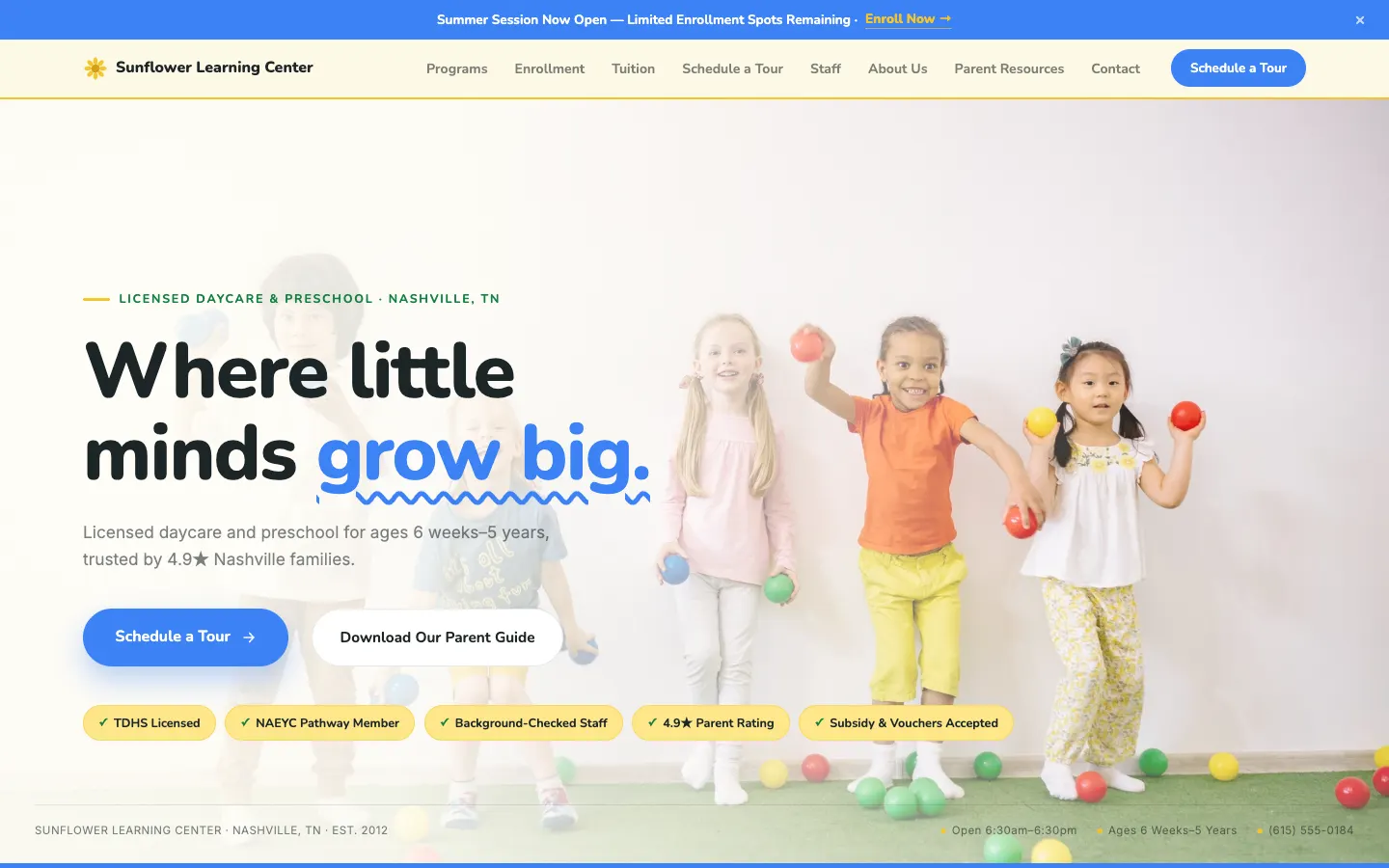
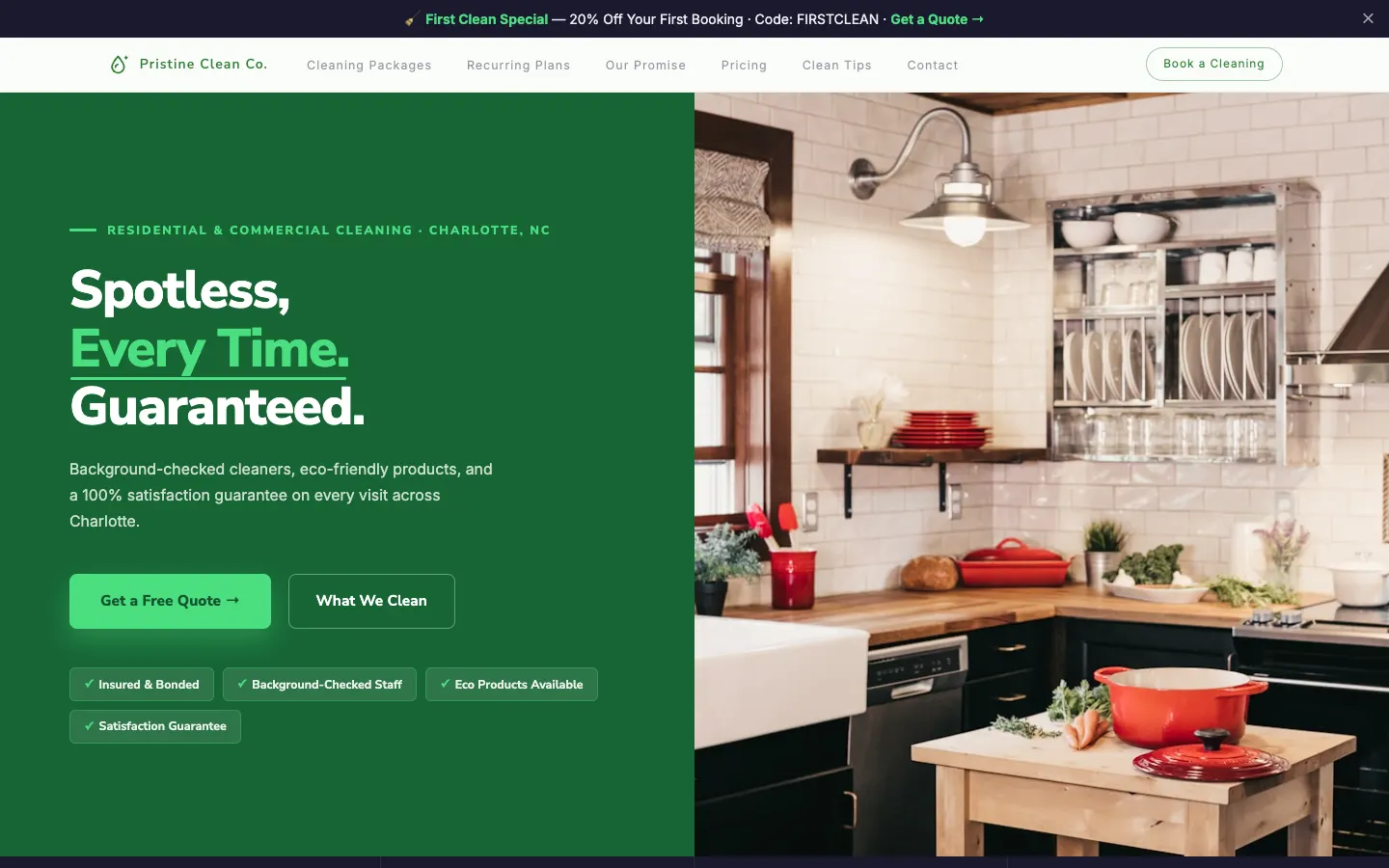
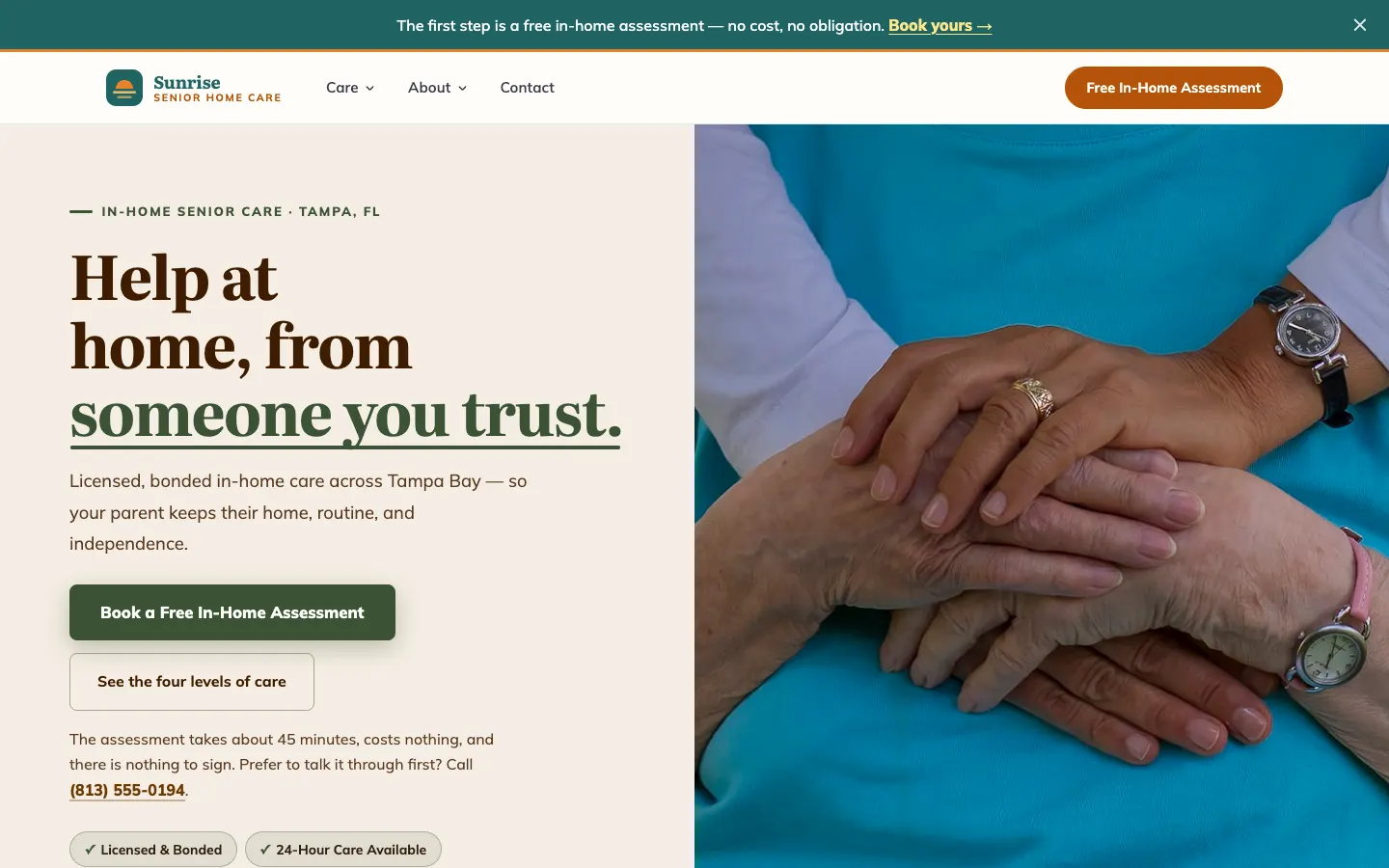
Free website build
We build the site. You run it on a plan.
Start a 12-month WorkspaceCMS plan and we design and build your website from scratch at no cost. The build is included. The platform runs on a monthly plan, and the page count scales with the tier.
In This Category
Franchise and Multi-Location, broken down.
Not One Business
Six formats, six sets of local economics
The units in this category share a playbook and almost nothing else. A gym sells a monthly membership and lives on churn, so the marketing job continues long after signup. Senior living and home health care sell a decision a family makes once, under stress, usually for someone else. Childcare and early learning runs on an enrolment calendar with fixed capacity and a waitlist. Self storage is close to pure proximity and price, decided in minutes. Franchise systems add an audience nobody else has, the prospective franchisee, whose funnel behaves like B2B lead generation rather than consumer demand.
What Gets In The Way
The problems that show up across this category.
The same brand bidding against itself
Two units in one metro will chase the same searches, and paid campaigns end up paying twice for one customer. Location pages built from a template compete with each other for the same city term. Someone has to decide which unit owns which territory, and that decision belongs to the brand, not to whichever operator spends hardest.
Listing accuracy stops being a setup task
A holiday closure, a new manager, a phone system change or a remodel touches profile data on every surface a customer checks. Multiply that by hundreds of profiles and by aggregators that repopulate old records, and accuracy becomes ongoing operations. The cost of getting it wrong lands on the location, not on head office.
Brand control against operator autonomy
Operators want to run their own promotions and post their own photos. Franchise agreements and brand standards say otherwise. Lock it down completely and local pages go stale and generic. Open it up completely and claims appear that nobody approved. The workable answer is a bounded asset library plus a fast approval path, not a rule everyone ignores.
Attribution per location decides the budget
A regional number tells an operator nothing about their own unit. Without calls, forms and visits attributed to their location, local spend looks like a tax collected by corporate, and it gets cut in the first slow quarter. Reporting per location is what keeps local budgets funded and arguments short.
How We Work
What we do about it.
One brand layer, many local layers
We build the category and brand terms once at national level, then give each unit its own page, its own profile discipline and its own local content. Templates carry the structure. The detail is genuinely local: the staff, the parking, the neighbourhoods served, the questions that market actually asks.
A profile system, not a profile project
Listing data gets a single source of truth, a change process and a recurring audit rather than a one time cleanup. When a unit changes hours or a manager leaves, one update moves through every surface. Duplicate and suppressed profiles get found on a schedule instead of when a customer complains.
A cold start plan for every new unit
A new location opens with no reviews, no local history and no proximity signal. We treat an opening as its own campaign: profile live and verified early, a location page with real detail, a review programme from day one, and paid coverage held tight to the trade area until organic can carry it.
Services for Franchise and Multi-Location
How the work actually gets done.
Search Engine Optimization
Own the searches your buyers actually make, at any scale.
Learn moreLocal and Multi-Location SEO
Win the map pack in one market or in two hundred.
Learn morePaid Media and Google Ads
Demand you can turn on today, measured to the lead.
Learn moreContent Marketing and Digital PR
Content that ranks, gets cited, and earns links.
Learn moreWeb Design and Conversion
Fast, conversion-first sites, built and then actually maintained.
Learn moreAI and Answer Engine Optimization
Get cited by ChatGPT, Claude, Perplexity and Gemini.
Learn moreQuestions
What franchise and multi-location ask us first.
If yours is not here, a free strategy call is the fastest way to get a specific answer about your market and your numbers.
Book a Free CallShould marketing be run by corporate or by each location?
Both, with a clear line between them. Corporate should own the brand, the website platform, the category level content, the measurement standard and the creative library, because all of those get worse when they are duplicated eighty times. Locations should own reviews, local photography, community relationships and promotions that fit their market. The failure we see most often is not the wrong split. It is an unwritten one, where nobody knows who owns the local page or who answers a one star review, so neither side does.
How long before a new location shows up in local search?
It varies by market density and by how contested the category is, and we do not guarantee rankings or timelines. What can be controlled is the order of operations. A verified profile with correct categories, a location page with real local substance, consistent data across the major aggregators and a steady flow of genuine reviews all matter before anything else does. Paid search covers the trade area while those signals build. Brands that wait until opening week to begin usually spend far longer buying traffic they could have earned.
Our locations are franchised. Who pays for what?
That is set by your franchise agreement and your marketing fund structure rather than by us, but the arrangement shapes the work. Where a national fund covers brand and category demand, local ad funds usually cover the trade area and the map pack. Problems appear when the fund pays for something an operator cannot see in their own numbers. We report at location level so a franchisee can tell what their contribution bought, which is usually what turns a fund from a grievance into a budget.
Do we need a separate website for each location?
Almost never. Separate sites split your authority, multiply maintenance and create dozens of places for outdated information to hide. One site with a strong location page per unit performs better and costs less to run. Those pages have to be substantially different from one another, though. Duplicated pages with the city name swapped are the most common reason a multi-location site underperforms. Each one needs its own staff, hours, photos, service details and answers to the questions that market asks.
How do we stop our locations competing with each other?
Draw the territory first, then build to it. Each unit gets defined neighbourhoods, and its page, its profile categories and its paid geotargeting all respect the same boundary. In dense metros some overlap is unavoidable, so the rule becomes which unit is closest rather than which is bidding hardest. On paid media, shared negative keyword lists and a single account structure stop two locations raising each other's costs on the same search.
Markets
Where we work with franchise and multi-location.
Client Voices
Real reviews, from real clients.
Every quote below is verbatim from a moderated review published on 1digitalreviews.com.
“1Digital has been my agency for 12 years and they’ve done a tremendous job growing my small business. They help with local seo, designing my website and support. Now I have them helping with AI SEO and getting found in chatgpt and Gemini.”
Hanna S.
Verified client review
“They communicate extremely well, they are all very knowledgeable, they all have great ideas, and it actually feels like they care about you and your company instead of just another client. In just a short amount of time they have achieved an extraordinary amount of traction for my business and I am very grateful for them!”
Brandyn Sethman
Verified client review
“Thanks to 1Digital Agency’s efforts, the client has seen a significant increase in web traffic and qualified demo requests. The team has executed a smooth workflow through effective communication and timeliness.”
Luke George
Verified client review
Grow your business with 1Digital.
Get a free audit and a written scope built for franchise and multi-location.