Free strategy call and written scope for local, regional and national brands. Book yours →

Home / Industries / Real Estate and Property / General Contractors
Local and regional
General Contractors marketing.
You do not win work from a form fill. You get on a bid list. We build the credibility that earns the invitation and fills the gaps between projects.
How do you market general contractors?
General contractors are marketed to a short list, not to a crowd. Owners, developers and architects prequalify before inviting bids, checking licensing, bonding capacity, insurance limits, safety record and comparable projects. So the work is a portfolio organized by sector and delivery method with size and schedule stated, published credentials, and visibility for a project type plus a city.
See It Working
Sites we built for businesses like yours.
Open any of these and use it. They run on WorkspaceCMS, on their own domains, at the speed and structure a client gets. The businesses are invented, because these are demonstration builds rather than client sites.
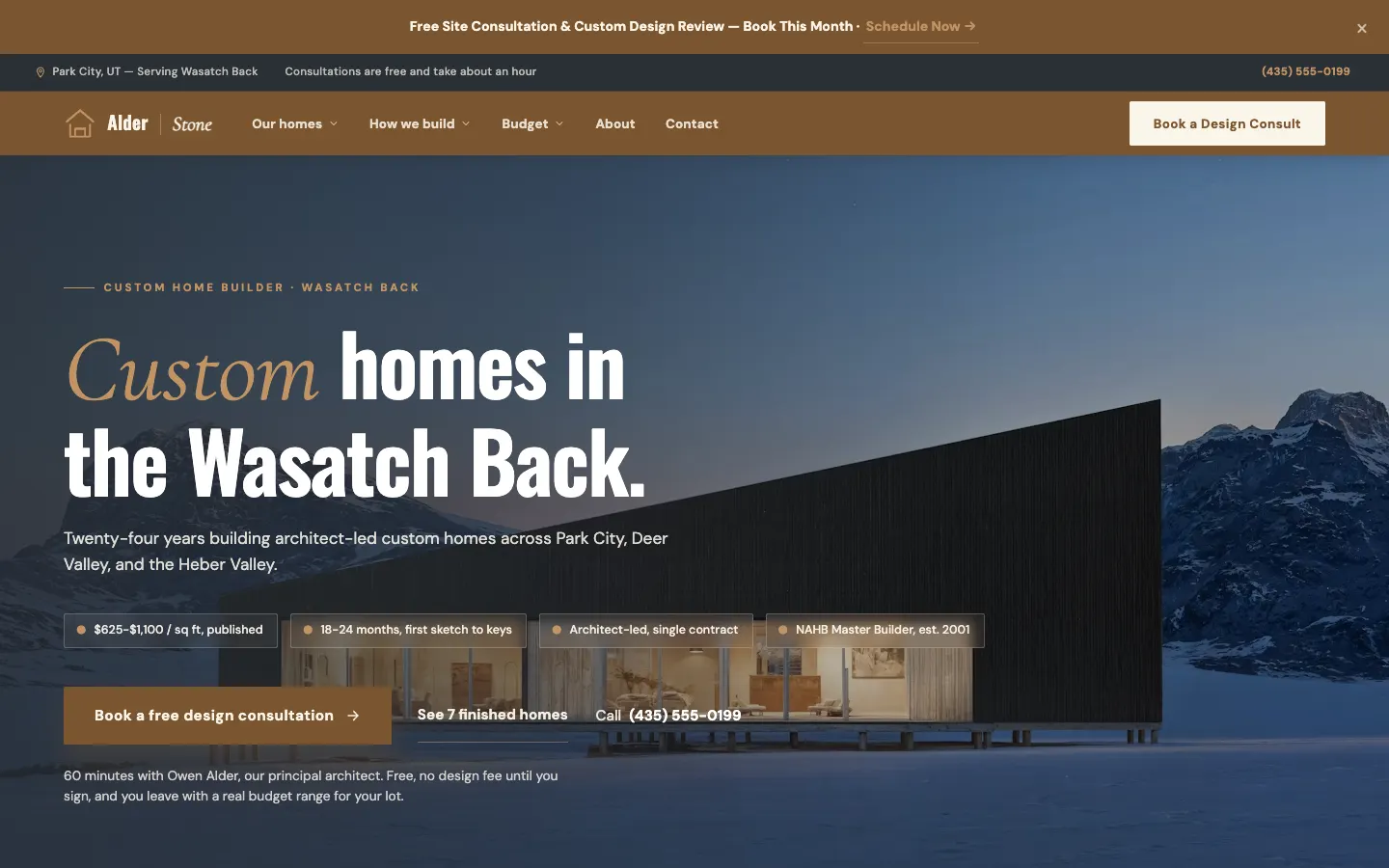
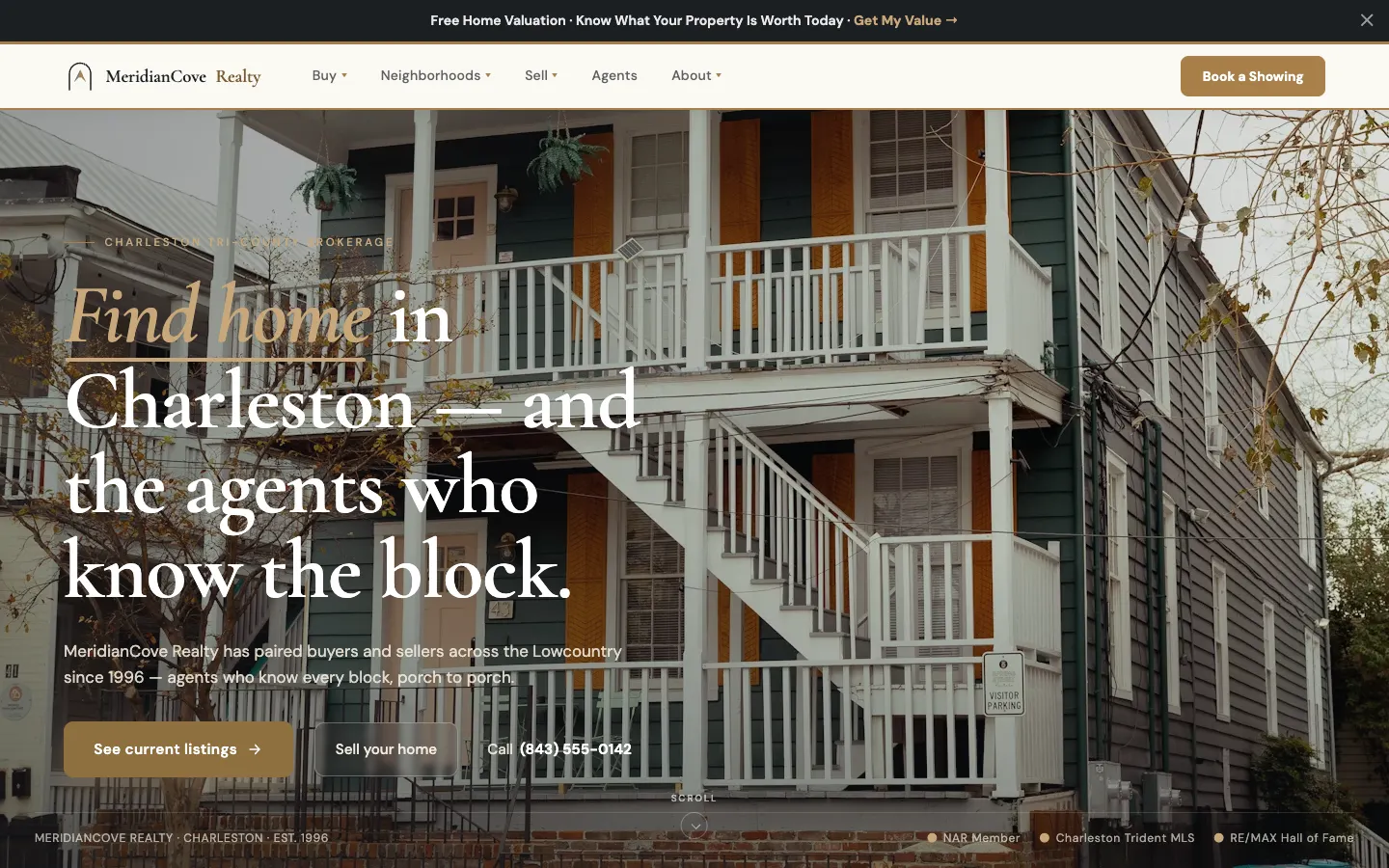

Free website build
We build the site. You run it on a plan.
Start a 12-month WorkspaceCMS plan and we design and build your website from scratch at no cost. The build is included. The platform runs on a monthly plan, and the page count scales with the tier.
What Is Different Here
Why general contractors do not market like everyone else.
Nobody hires a general contractor from a homepage. They assemble a bid list, and that list comes from architects, past owners, a developer's own history, and a search that happens weeks before any RFP is issued. The job of marketing is getting onto that list, which means proving you have built this type of building at this size before.
The proof is the portfolio, and most contractor portfolios are unusable. Twelve finished photos, no square footage, no delivery method, no schedule, no owner type. A facilities director looking for someone who has completed an occupied renovation of a medical office building needs to see exactly that, described in terms their architect will recognize immediately.
There is a second market on the other side of the business. Qualified subcontractors and skilled field staff are scarce, and they choose who to work for based on pay practices, project pipeline and how a job site is run. Recruiting content belongs on the same site and is usually missing entirely, which quietly caps how much work the company can take on.
What Gets In The Way
The problems that actually cost you revenue.
Prequalification happens before contact
Owners and architects check licensing, bonding capacity, insurance limits, safety metrics and comparable work before anyone picks up a phone. When those facts are not published, a firm gets filtered out silently and never learns it was under consideration. Most contractor websites publish none of them anywhere.
Project pages skip what qualifies you
A gallery of finished photography does not answer the questions that decide a bid list: square footage, delivery method, contract value range, schedule, occupied or ground up, sector and owner type. Without those, a project page cannot demonstrate relevant experience or rank for the searches decision makers actually run.
Residential and commercial work collide
Firms doing high end remodels alongside commercial buildouts often run one message for both, and it reads as unfocused to each audience. A homeowner planning an addition and a developer selecting a builder for a retail shell need different proof, different pages and completely different follow up after the first contact.
Subcontractor recruiting is word of mouth
Trade partner shortages cap growth more often than demand does. Yet there is rarely a page explaining prequalification requirements, payment terms, the upcoming project pipeline or how to get onto the bid list. Good subs choose contractors who pay on time and run organized sites, and almost nobody says so publicly.
How We Work
What we do about it.
A portfolio built for prequalification
Every project gets a page stating sector, delivery method, size, schedule, scope and the problems solved, alongside the photography. That is what an architect or owner scans, and it creates pages that earn visibility for the building types and project sizes you want more of next year.
Credentials published where buyers look
Licensing by state, bonding capacity, insurance limits, safety record, certifications and key personnel with their real experience, presented as facts rather than adjectives. It removes the reasons a firm gets quietly dropped from a list and shortens the prequalification exchange considerably.
A trade partner and hiring section
Pages for subcontractors and field staff covering how to prequalify, payment practices, the pipeline of upcoming work, safety expectations and who to contact. It addresses the constraint that actually limits growth, and it costs a fraction of what chasing additional bid invitations costs.
Services
The disciplines behind it.
Search Engine Optimization
Own the searches your buyers actually make, at any scale.
Learn moreLocal and Multi-Location SEO
Win the map pack in one market or in two hundred.
Learn morePaid Media and Google Ads
Demand you can turn on today, measured to the lead.
Learn moreContent Marketing and Digital PR
Content that ranks, gets cited, and earns links.
Learn moreWeb Design and Conversion
Fast, conversion-first sites, built and then actually maintained.
Learn moreAI and Answer Engine Optimization
Get cited by ChatGPT, Claude, Perplexity and Gemini.
Learn moreQuestions
What general contractors ask us first.
If yours is not here, a free strategy call is the fastest way to get a specific answer about your market and your numbers.
Book a Free CallHow do general contractors get on more bid lists?
By being verifiably relevant before the invitation is written. Publish project pages organized by sector and delivery method with size, schedule and scope, so an architect looking for someone who has completed a similar building finds evidence instead of a photo gallery. Publish bonding capacity, licensing and safety metrics. Then maintain the relationships that generate invitations: architects, developers, owner representatives and past clients. Search visibility supports those relationships. It does not replace a single one of them.
Is search marketing useful for commercial construction?
Yes, though volume is small and the searches are very specific. People look for a commercial general contractor in a named city, for a project type such as tenant improvement, medical office or cold storage, and for firms by name after a referral. That last one matters more than it appears, because a referred prospect who finds a weak website quietly drops you without ever calling. We target the project types you want and measure qualified inquiries rather than traffic.
Should residential remodeling live on the same website?
Only with a clear separation. The two audiences evaluate completely different things and the sales cycles bear no resemblance to each other. If both lines are meaningful revenue, give each its own section with its own navigation, portfolio, process explanation and contact path, and keep the messaging distinct. If one line is a small share of the business and not strategic, a separate brand is often cleaner than blending both into one confusing story.
What should a contractor publish about safety?
Publish what an owner's risk manager asks for: your experience modification rate, recordable incident data where it is favorable, the certifications your supervisors hold, your safety program structure and who runs it. Keep it factual and current, and update it whenever the numbers change. Safety information is one of the few things on a contractor site read closely by the person deciding whether to invite you, and vague statements about a commitment to safety carry no weight at all.
Related Industries
Close enough that the playbook overlaps.
Home Builders
Marketing communities, floor plans and quick move in homes to buyers who tour long before they call.
Electricians
Panel upgrades, EV chargers and code corrections: licensed work sold on competence, not speed.
Flooring Contractors
Buyers pick the material first, then an installer. The in home measure is where the job is won.
Selling online instead?
This practice is built for service businesses, firms, practices and B2B. If your revenue comes from an online store, the 1Digital Agency eCommerce team has run ecommerce SEO, paid media and platform work since 2012 and is the better fit.
Markets
Where we work with general contractors.
Grow your business with 1Digital.
Get a free audit and a written scope built for general contractors.