Free strategy call and written scope for local, regional and national brands. Book yours →

Home / Industries / Home Services and Trades / Commercial and Residential Cleaning
Local and regional
Commercial and Residential Cleaning marketing.
Cleaning splits cleanly between recurring household routes and commercial janitorial contracts won on bids and reliability.
How do you market commercial and residential cleaning?
Cleaning marketing depends entirely on which side you run. Residential is a recurring route business: market on trust and vetting, since you are asking for keys to a home, use online booking with instant pricing by bedroom count, and measure retention rather than first cleans. Commercial janitorial is a procurement sale: it needs square footage based bidding, proof of insurance and bonding, staffing and supervision detail, and a site aimed at facilities managers and property managers rather than homeowners.
See It Working
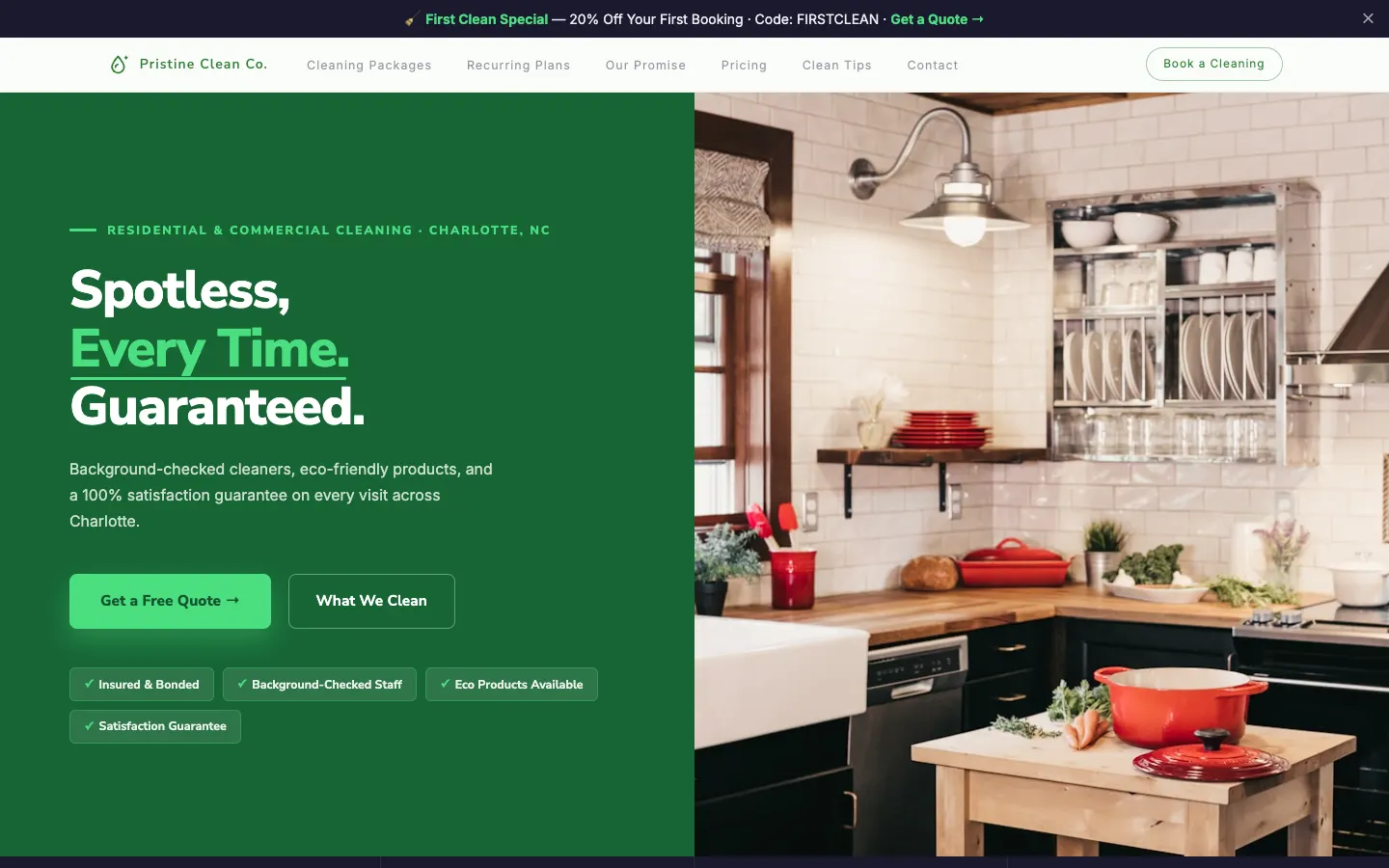
Commercial and Residential Cleaning: a site we built, live right now.
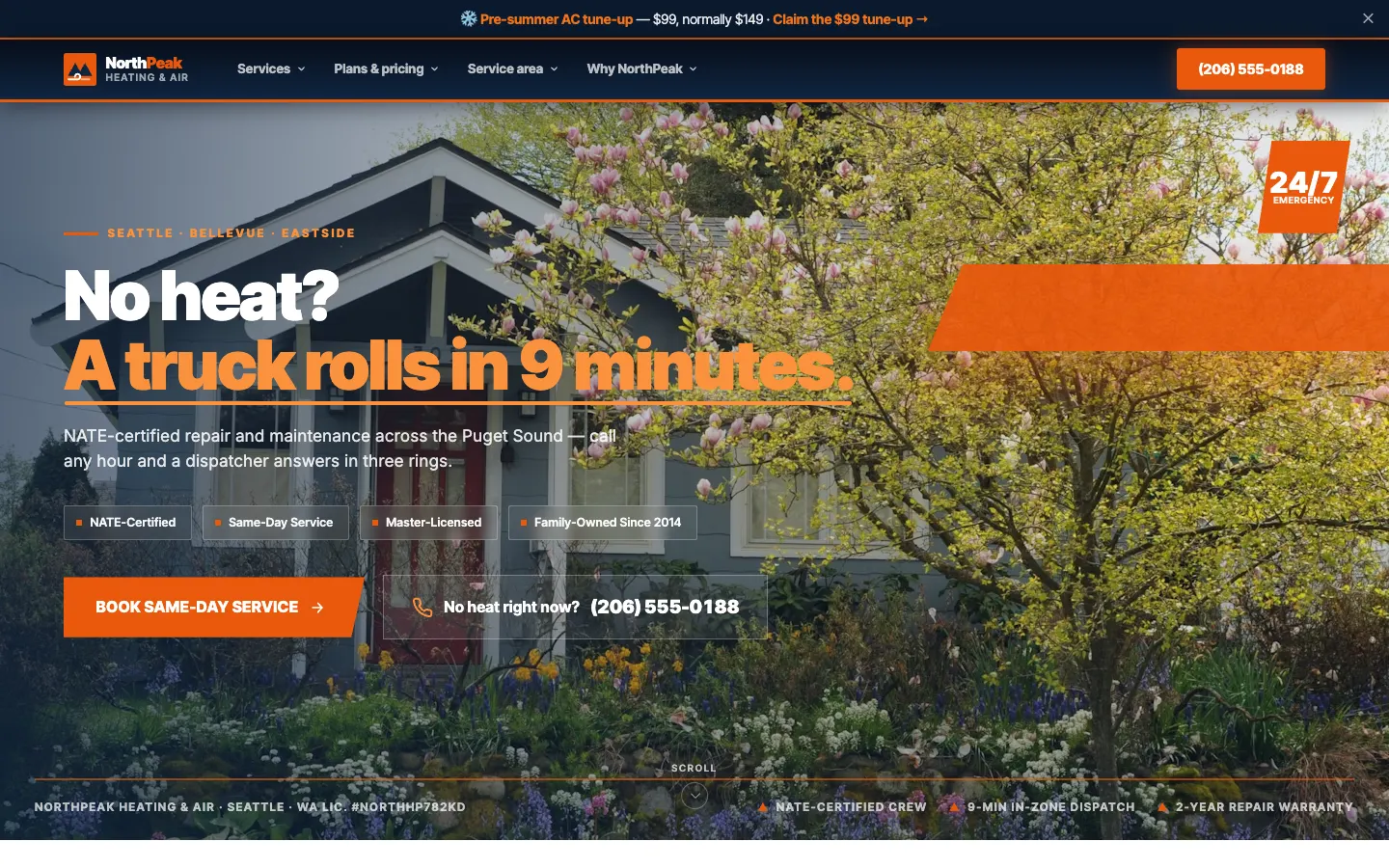
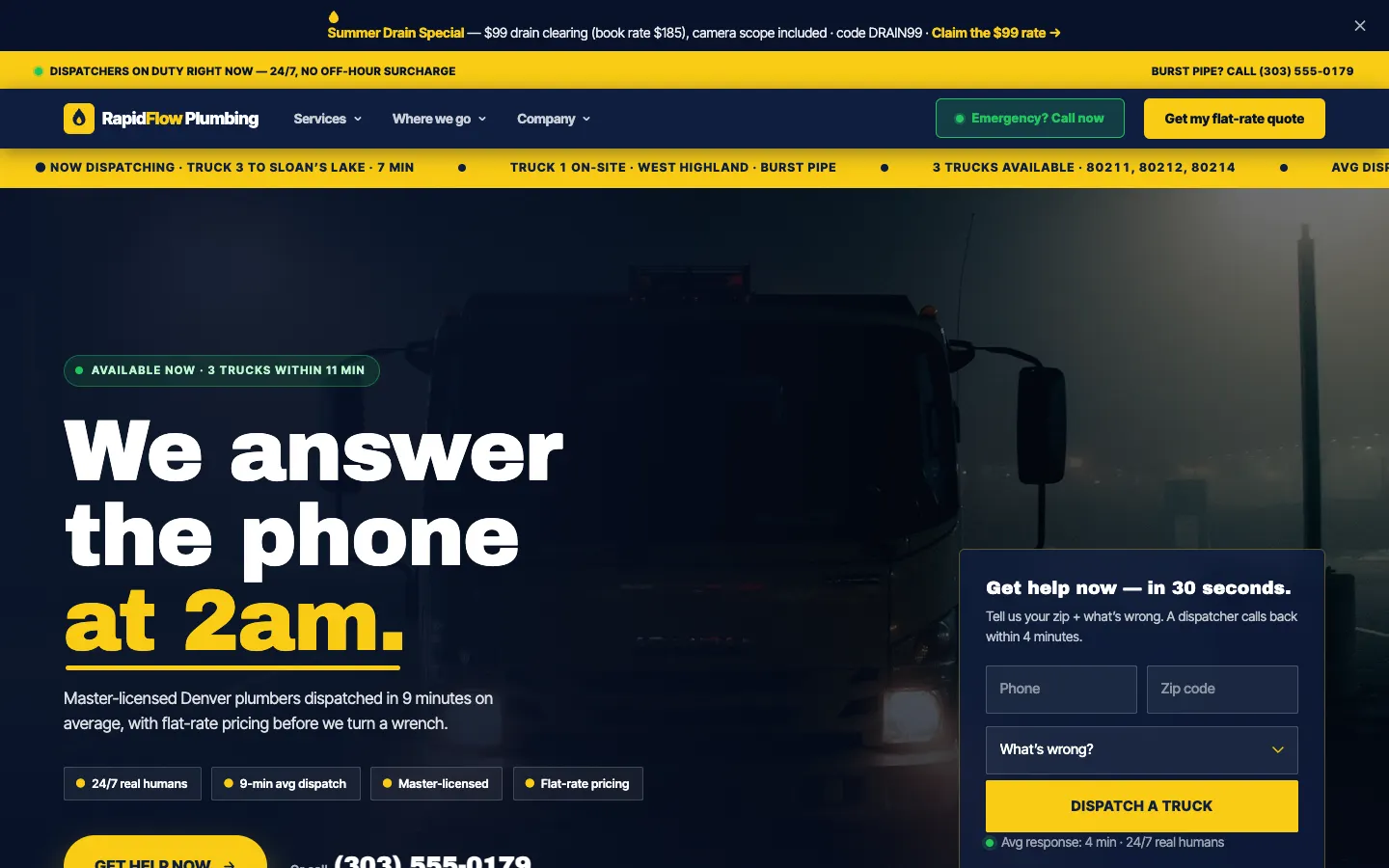
Open any of these and use it. They run on WorkspaceCMS, on their own domains, at the speed and structure a client gets. The businesses are invented, because these are demonstration builds rather than client sites.
Free website build
We build the site. You run it on a plan.
Start a 12-month WorkspaceCMS plan and we design and build your website from scratch at no cost. The build is included. The platform runs on a monthly plan, and the page count scales with the tier.
What Is Different Here
Why commercial and residential cleaning do not market like everyone else.
The residential customer is handing a stranger a key. That single fact governs the whole marketing problem. Background checks, bonding, insurance, employee versus contractor status and consistency of the same cleaner every visit matter more than any pricing argument. Trust is the product, and it has to be established before someone will fill in a booking form at all.
Commercial janitorial has nothing in common with that. A facilities manager or property manager is running a bid process, comparing square footage rates, checking insurance certificates, asking about supervision, staffing ratios and what happens when someone calls out sick. The contract runs a year or more, it is worth many times a residential account, and it is won on operational credibility.
Both sides live or die on retention. A residential client who stays two years is profitable and one who cancels after three cleans is not. A commercial contract that renews is the foundation of the whole company. Yet most cleaning marketing is built to generate first-time bookings and pays almost no attention to the thing that actually determines whether the business grows.
What Gets In The Way
The problems that actually cost you revenue.
You are asking for keys to a home
A residential prospect is deciding whether to let an unknown person into their house while they are at work. Background screening, bonding, insurance, whether cleaners are employees, and whether the same person comes each visit all outweigh price. Sites that lead with a discount and say nothing about vetting lose the cautious buyer entirely.
First cleans that never become regulars
Deep clean and move out jobs are high effort and one time. They fill the calendar without building the business. The whole model depends on converting a first visit into a recurring schedule, and most companies have no deliberate mechanism for making that happen at the moment of highest satisfaction.
Commercial bids need proof residential sites lack
A facilities manager wants square footage pricing, insurance limits, workers compensation, supervision structure, cover arrangements for absences and references from comparable buildings. A website full of sparkling kitchen photos and a book online button answers none of it and quietly disqualifies you before a conversation happens.
Turnover breaks the customer relationship
Staffing churn is the structural problem in this industry, and clients feel it immediately when a new person arrives who does not know the house or the building. Cancellations often follow a personnel change rather than a service failure, which means recruitment marketing is part of the retention story.
How We Work
What we do about it.
Make vetting the headline
Background checks, bonding, insurance limits, training process, employee status and team consistency stated plainly and early, with photos of real staff rather than stock images. This is the objection that stops residential bookings, and answering it before the price is what turns a browser into a booking.
Book instantly with transparent pricing
Instant quotes by bedroom and bathroom count, frequency options that show the recurring discount clearly, and online scheduling that completes without a phone call. Weekly and biweekly should be presented as the default and one time as the exception, because the pricing display itself does a lot of the retention work.
Build a real commercial track
A separate section for facilities and property managers: square footage bidding, service scopes by facility type, insurance and compliance documentation, supervision and quality control, and a request for proposal form that captures building size and cleaning frequency. Different audience, different proof, longer cycle, much larger contract value.
Services
The disciplines behind it.
Search Engine Optimization
Own the searches your buyers actually make, at any scale.
Learn moreLocal and Multi-Location SEO
Win the map pack in one market or in two hundred.
Learn morePaid Media and Google Ads
Demand you can turn on today, measured to the lead.
Learn moreContent Marketing and Digital PR
Content that ranks, gets cited, and earns links.
Learn moreWeb Design and Conversion
Fast, conversion-first sites, built and then actually maintained.
Learn moreAI and Answer Engine Optimization
Get cited by ChatGPT, Claude, Perplexity and Gemini.
Learn moreQuestions
What commercial and residential cleaning ask us first.
If yours is not here, a free strategy call is the fastest way to get a specific answer about your market and your numbers.
Book a Free CallShould I show prices on my residential cleaning site?
Yes, and instant quoting by home size converts better than a call for a quote form in almost every case. People planning to hire a cleaner want to know whether this fits their budget before they speak to anyone. Show recurring rates against one time rates so the frequency discount is obvious at the moment of decision. Hidden pricing mostly filters out good customers who did not want a sales conversation, while your competitor with a quote calculator books them.
How do I turn move out and deep cleans into regular clients?
Ask at the point of maximum satisfaction, which is right after the job, and make the offer concrete. A discount on the first recurring visit, scheduled before the cleaner leaves, converts far better than an email a week later. Structure your pricing so recurring service is visibly cheaper per visit. And track this as a metric, because most companies genuinely do not know what percentage of one time jobs become recurring accounts.
How is marketing to facilities managers different?
Everything changes. The buyer is professional, the process is a bid, and the criteria are operational: cost per square foot, insurance limits, workers compensation coverage, supervision structure, quality inspection procedures, and how you cover absences. They want references from buildings similar to theirs. This is longer cycle work driven by search visibility for commercial and janitorial terms, direct outreach, and property management relationships, not by a booking widget.
Does recruiting affect my marketing?
More than most owners expect. Cleaning is capacity constrained, so demand you cannot staff is wasted spend, and turnover is a leading cause of client cancellation. We often build a careers section and run recruitment alongside customer acquisition, because a company that can reliably staff consistent teams retains clients far better. Growth in this industry is a hiring problem at least as often as it is a lead problem.
Related Industries
Close enough that the playbook overlaps.
Property Management
Two audiences, one company: owners deciding who manages the door, and residents deciding where to lease.
Commercial Real Estate
Marketing to investors, tenants and capital: deals surface on platforms, mandates are won on reputation.
Painting Contractors
A discretionary purchase, quote-shopped hard, decided on crew quality and finish.
Selling online instead?
This practice is built for service businesses, firms, practices and B2B. If your revenue comes from an online store, the 1Digital Agency eCommerce team has run ecommerce SEO, paid media and platform work since 2012 and is the better fit.
Markets
Where we work with commercial and residential cleaning.
Grow your business with 1Digital.
Get a free audit and a written scope built for commercial and residential cleaning.