Free strategy call and written scope for local, regional and national brands. Book yours →

Home / Industries / Healthcare and Medical / Dermatology
Local and regional
Dermatology marketing.
One practice, two payers. Insurance-based medical derm and cash-pay cosmetic derm need separate paths, separate campaigns and separate proof.
How do you market dermatology?
Dermatology marketing has to split the medical side from the cosmetic side. Medical dermatology converts on network status, skin cancer screening availability and how soon a patient can be seen. Cosmetic dermatology is cash-pay and converts on price, provider credentials and before and after evidence. Run them as separate funnels with separate landing pages and separate campaigns, and keep every clinical page under physician review.
See It Working
Sites we built for businesses like yours.
Open any of these and use it. They run on WorkspaceCMS, on their own domains, at the speed and structure a client gets. The businesses are invented, because these are demonstration builds rather than client sites.
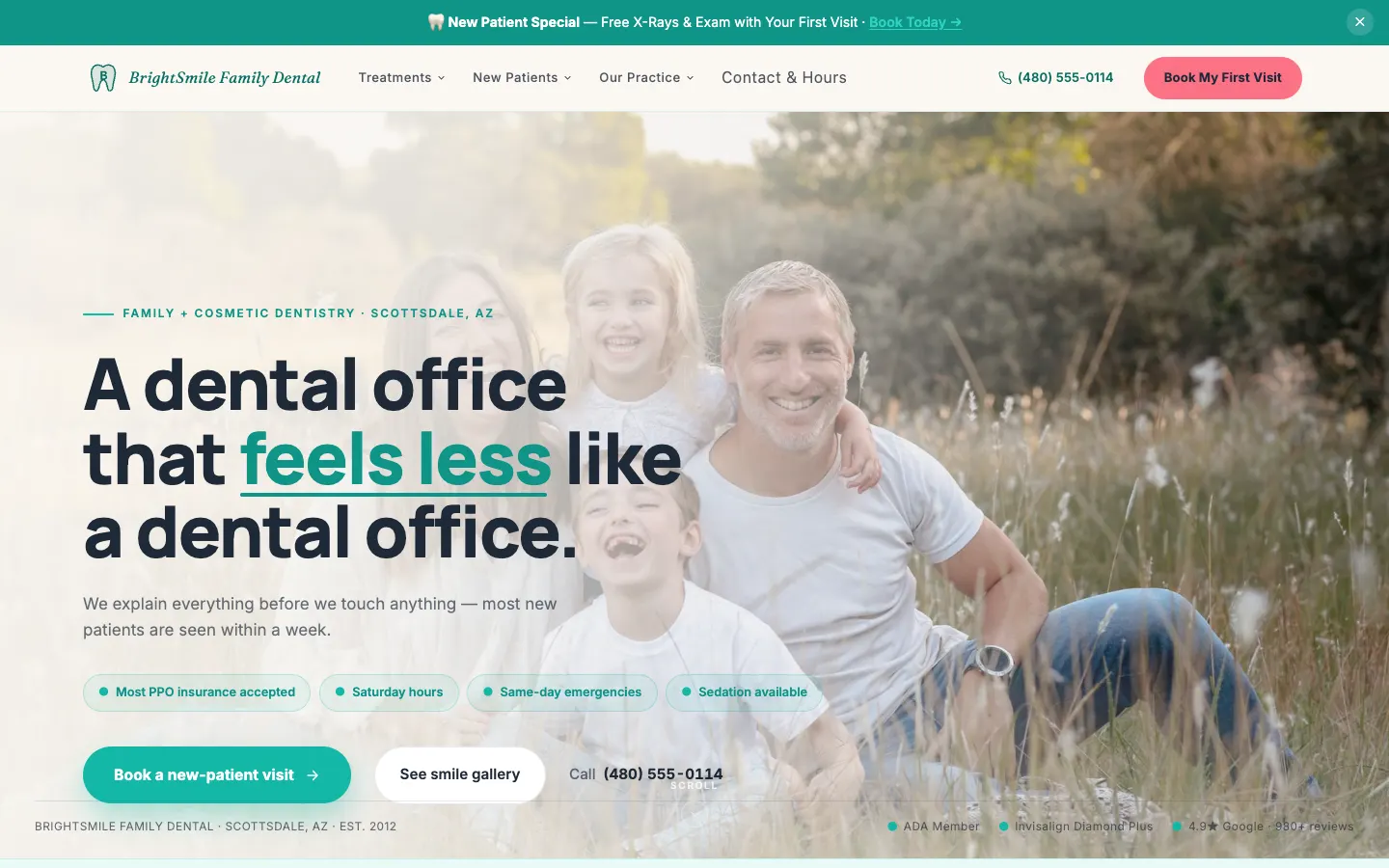
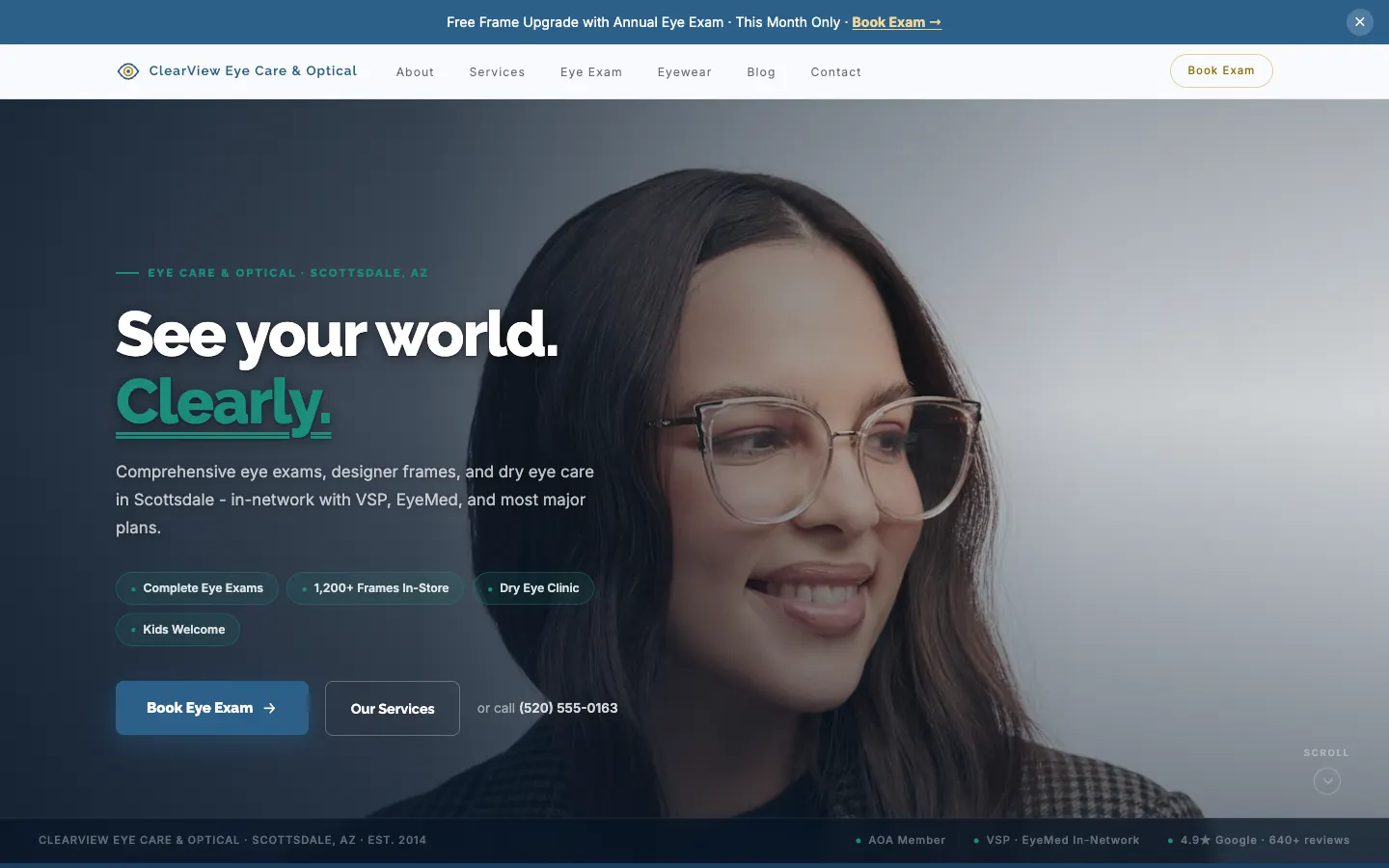
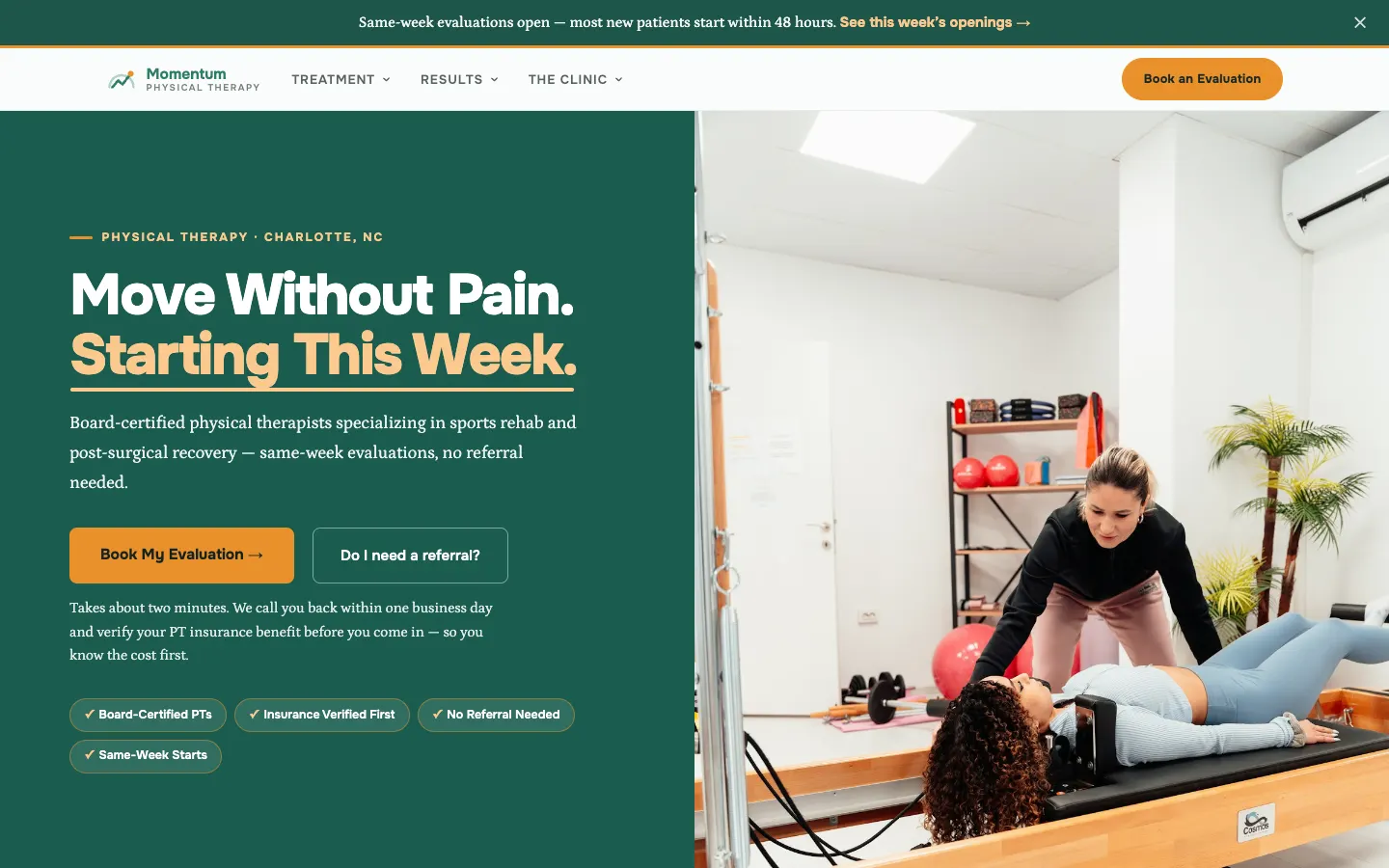
Free website build
We build the site. You run it on a plan.
Start a 12-month WorkspaceCMS plan and we design and build your website from scratch at no cost. The build is included. The platform runs on a monthly plan, and the page count scales with the tier.
What Is Different Here
Why dermatology do not market like everyone else.
Very few practices carry this much intent variation on one domain. A person searching a suspicious mole, a teenager's parent searching acne treatment, and someone comparing injectable pricing are all valid dermatology patients, and they share almost nothing. The first is urgent and insurance-driven. The second is chronic and price-sensitive. The third is elective, cash-pay and shopping you against a med spa two blocks away.
Appointment scarcity shapes the whole category. Wait times for medical dermatology are long in most markets, so the practice that can show near-term availability has a real advantage and the one that cannot needs to say so honestly rather than let a patient book and be disappointed. Availability is a marketing asset in this specialty in a way it is not in most.
Cosmetic revenue funds a lot of practices and carries all the compliance risk. Before and after imagery, outcome language and testimonials are exactly where a dermatology site gets into trouble, both with regulators and with the platform policies that govern health advertising. The distinction between showing a result and promising one has to be built into how the pages are written.
What Gets In The Way
The problems that actually cost you revenue.
Cosmetic and medical fight for the same site
A homepage that leads with injectables makes a patient with a changing mole doubt the practice is clinical. A homepage that leads with skin cancer makes a cosmetic patient assume you are not the aesthetic choice. Serving both from one undifferentiated front page suppresses conversion on both sides.
Med spas compete on your cosmetic services
The same injectable is offered a few doors down at a lower price with better photography and fewer regulatory scruples. A dermatology practice cannot win that on price. It has to convert on physician oversight and credentials, and most practice sites never make that difference explicit.
Before and after imagery is high risk
Photo evidence converts better than any copy in cosmetic dermatology, and it carries consent, HIPAA and advertising policy exposure. Practices either publish images without documented consent or avoid them completely and lose the strongest asset they have. Neither outcome is acceptable.
Long waits kill hard-won demand
A practice can rank well, spend well and still lose patients at the last step because the first available medical appointment is nine weeks out. The booking experience never surfaces this, so the practice sees enquiries and no shows without seeing the cause.
How We Work
What we do about it.
Two funnels under one brand
Distinct sections, distinct landing pages and distinct campaigns for medical and cosmetic dermatology, with navigation that lets a visitor self-select in one click. Each side gets its own conversion path, its own proof and its own measurement, so cosmetic performance never masks a medical acquisition problem.
Lead cosmetic pages on physician oversight
Against a med spa, the differentiator is who is holding the syringe and who is supervising. We build that into the page: board certification explained, who performs each treatment, and what happens if something goes wrong. Pricing is published as ranges so the comparison happens on your terms.
A consent-clean imagery workflow
We set up a documented process for photo consent, storage and usage, and we write outcome copy that describes what a treatment does without promising a result. Your practice approves every image and every clinical statement. The library then works across the site, paid social and search without a compliance argument each time.
Services
The disciplines behind it.
Search Engine Optimization
Own the searches your buyers actually make, at any scale.
Learn moreLocal and Multi-Location SEO
Win the map pack in one market or in two hundred.
Learn morePaid Media and Google Ads
Demand you can turn on today, measured to the lead.
Learn moreContent Marketing and Digital PR
Content that ranks, gets cited, and earns links.
Learn moreWeb Design and Conversion
Fast, conversion-first sites, built and then actually maintained.
Learn moreAI and Answer Engine Optimization
Get cited by ChatGPT, Claude, Perplexity and Gemini.
Learn moreQuestions
What dermatology ask us first.
If yours is not here, a free strategy call is the fastest way to get a specific answer about your market and your numbers.
Book a Free CallShould medical and cosmetic dermatology share one website?
One website, two clearly separate paths. Splitting into two domains costs you authority and doubles the maintenance, but blending the two on one homepage suppresses both. Give each side its own section, its own landing pages and its own campaigns, with a navigation choice a visitor makes immediately. Measure them separately too. Cosmetic revenue is easy to grow and easy to let hide a decline in medical new-patient volume, which is the harder problem to fix later.
Can we publish before and after photos safely?
With documented consent and careful language, yes, and they are worth the effort because nothing converts a cosmetic patient better. The risks are consent, identifiability and outcome claims. We put a written consent and storage process in place, keep images tied to that record, and write captions that describe the treatment rather than promising what a new patient will get. Your practice approves each image before use, and any image can be pulled on request.
How do we compete with med spas on injectables?
By making the supervision difference visible rather than assumed. Say who performs the treatment, what their credentials are, who is on site, and what your protocol is when a patient has a complication. Publish price ranges so you are not eliminated before the conversation starts. You will not be the cheapest and you should not try to be. The patients worth having are the ones weighing risk, and most practice sites never give them anything to weigh.
Our medical wait time is months out. Should we still advertise?
Advertise, but tell the truth on the page. Publishing typical wait ranges and offering a cancellation list converts better than silence, because the patient can plan instead of feeling misled. For urgent presentations such as a rapidly changing lesion, a clearly marked triage path protects both the patient and the practice. Hiding the wait produces bookings you cannot honour, no-shows and reviews that cost you more than the appointments were worth.
Related Industries
Close enough that the playbook overlaps.
Plastic Surgery
Cash-pay, high consideration, researched for months and decided on the surgeon.
Med Spas and Aesthetics
Elective, cash pay and repeating: the consult converts, and loyalty follows the injector.
Medical Practices
Patients search by symptom, choose by provider, and book only if their plan is in network.
Selling online instead?
This practice is built for service businesses, firms, practices and B2B. If your revenue comes from an online store, the 1Digital Agency eCommerce team has run ecommerce SEO, paid media and platform work since 2012 and is the better fit.
Markets
Where we work with dermatology.
Grow your business with 1Digital.
Get a free audit and a written scope built for dermatology.