Free strategy call and written scope for local, regional and national brands. Book yours →

Home / Industries / Law Firms and Legal / Family Law Firms
Local and regional
Family Law Firms marketing.
Family law clients are comparing firms during one of the worst weeks of their lives. Tone and clarity convert here more reliably than keyword volume.
How do you market family law firms?
Marketing a family law firm starts with tone. The person searching is in distress and comparing several firms privately, often late at night, so the site has to explain process, cost structure and what the first meeting involves without pressure. Build pages by matter type such as custody, support and property division, earn local visibility in the counties you file in, publish plain-language guides to your state's process, and offer a confidential contact path. The firm reviews any claim about outcomes.
See It Working
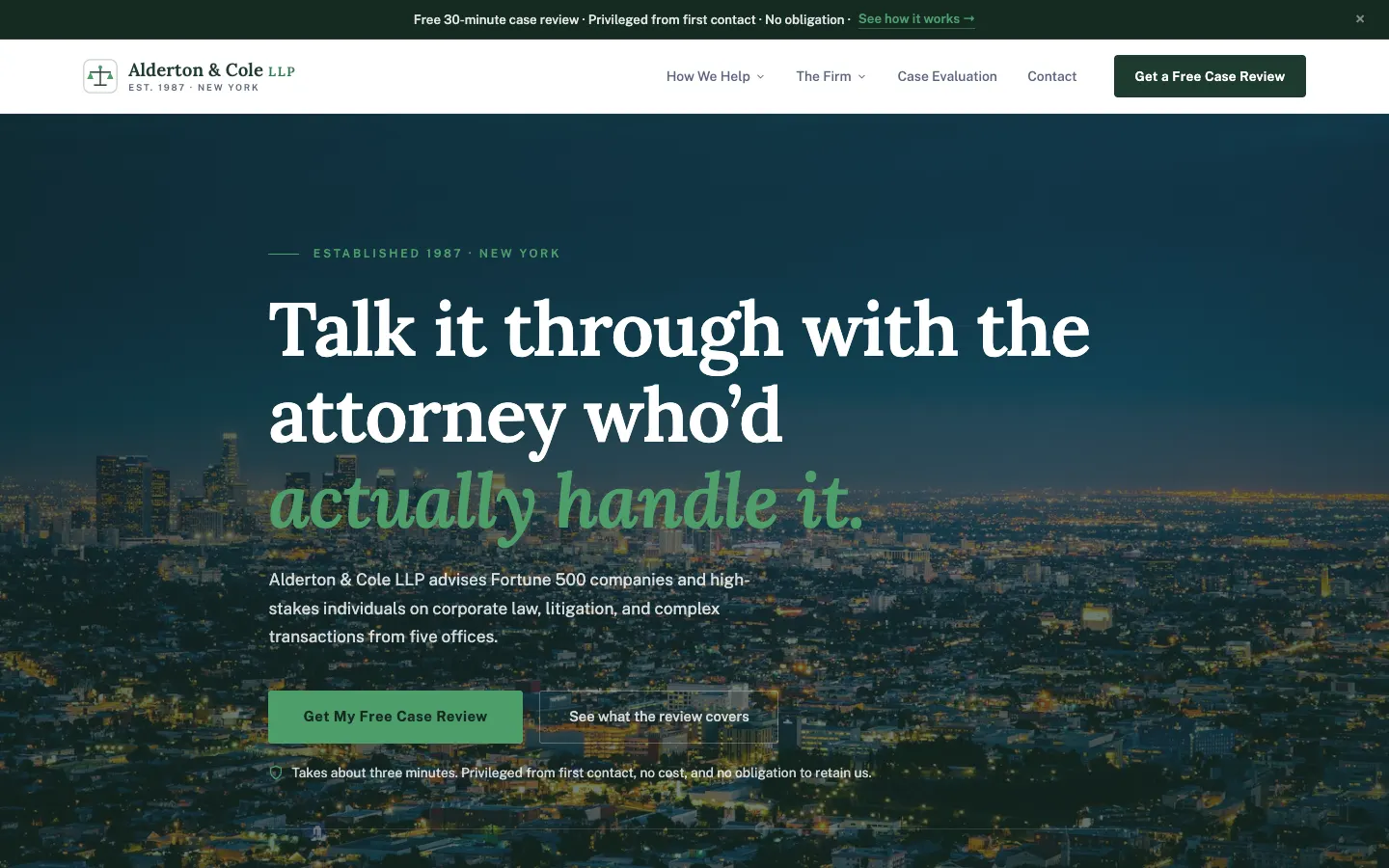
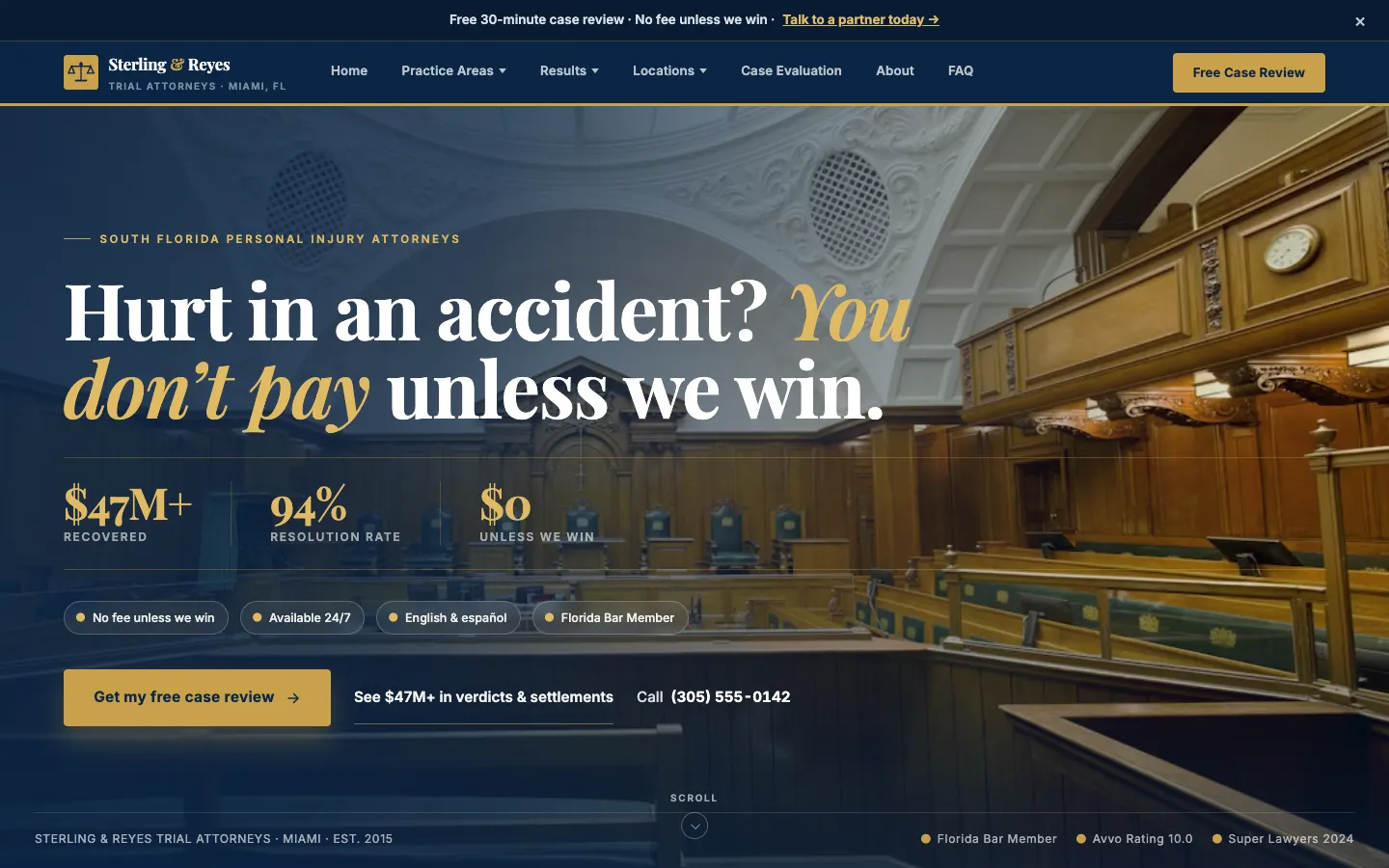
Family Law Firms: a site we built, live right now.
Open any of these and use it. They run on WorkspaceCMS, on their own domains, at the speed and structure a client gets. The businesses are invented, because these are demonstration builds rather than client sites.
Free website build
We build the site. You run it on a plan.
Start a 12-month WorkspaceCMS plan and we design and build your website from scratch at no cost. The build is included. The platform runs on a monthly plan, and the page count scales with the tier.
What Is Different Here
Why family law firms do not market like everyone else.
Almost nobody browses family law. They arrive after a decision has been made or forced, and the first thing they want is to understand what is about to happen to them. That makes the site's job explanatory before it is persuasive. A page that walks through how custody is decided in that state will hold attention far longer than one that opens with awards.
Privacy shapes behavior in a way it does not in other practice areas. People research on a phone, in a browser window they close quickly, sometimes from a shared household. They may look for weeks before contacting anyone. That means brand recall and repeated encounters matter, and it means aggressive retargeting or anything that shows up in a shared inbox can do real harm.
The comparison is emotional as much as rational. Fee structure matters, experience matters, but so does whether the attorney sounds like someone who will steady the situation. Attorney bios, a clear description of the consultation, and honest language about timelines and cost tend to move a hesitant reader more than any volume of keyword-targeted content.
What Gets In The Way
The problems that actually cost you revenue.
Long, silent research windows
A prospective client may read a firm's site four times across three weeks before calling. Nothing in that behavior looks like a lead. Attribution models that credit only the last click undervalue the guides and bios that actually built the confidence to pick up the phone.
Emotional tone is a conversion factor
Copy that leans on aggression, combat metaphors or courtroom bravado alienates a large share of readers, especially parents trying to keep a custody matter calm. The same page can read as reassuring or alarming depending on word choice, and most firms never test that.
Privacy limits the usual tactics
Retargeting ads that follow someone across the web, email sequences to a shared address and visible review requests all create risk in a domestic situation. Standard playbooks assume a buyer who does not mind being followed, and family law clients often mind a great deal.
State process differs county by county
Filing requirements, waiting periods, mediation rules and local court practice vary. Generic national content about divorce answers nothing and signals that the firm is not local. Accurate county-level explanation is what earns trust, and it takes attorney input to write.
How We Work
What we do about it.
Plain-language process guides
We write your state and county's actual process in language a non-lawyer follows: what gets filed, what the timeline looks like, what happens at each hearing type. The attorney reviews for accuracy. These pages carry the search traffic and do most of the trust-building before contact.
Discreet contact and consultation paths
Confidential inquiry forms, a clear statement of how and when the firm responds, and consultation copy that says what the meeting covers and costs. We keep retargeting conservative and avoid anything that would surface the firm's name in a shared household.
Bios and tone written to reassure
Attorney pages that read like a person rather than a resume, with a stated approach to negotiation versus litigation. We test headline and lede tone on the highest-traffic matter pages, because the same information delivered calmly converts differently than the same information delivered as a fight.
Services
The disciplines behind it.
Search Engine Optimization
Own the searches your buyers actually make, at any scale.
Learn moreLocal and Multi-Location SEO
Win the map pack in one market or in two hundred.
Learn morePaid Media and Google Ads
Demand you can turn on today, measured to the lead.
Learn moreContent Marketing and Digital PR
Content that ranks, gets cited, and earns links.
Learn moreWeb Design and Conversion
Fast, conversion-first sites, built and then actually maintained.
Learn moreAI and Answer Engine Optimization
Get cited by ChatGPT, Claude, Perplexity and Gemini.
Learn moreQuestions
What family law firms ask us first.
If yours is not here, a free strategy call is the fastest way to get a specific answer about your market and your numbers.
Book a Free CallShould we advertise on Google for divorce keywords?
Often yes, but narrowly. Broad divorce terms attract people at the earliest stage of thinking, many of whom never retain anyone. Terms that describe a specific need such as a modification, a relocation dispute or an uncontested filing produce better conversations. We also watch the ad copy carefully. Family law ads that promise to win or to fight rarely perform as well as ads that offer a clear, private first conversation.
Do client reviews help or create problems?
They help, and they need care. Many clients will not review a divorce publicly, and asking at the wrong moment is intrusive. We build a request process that respects confidentiality, times the ask after a matter closes, and never scripts what someone should say. Anything you publish about a client experience gets your review first, because state bar rules on testimonials vary and a well-meaning quote can imply an outcome promise.
How do we compete with the big divorce firms in our metro?
Specificity, usually. Larger firms publish broad content covering everything. A practice that goes deep on a defined area, for example high-conflict custody, military divorce or complex asset division, can own those searches without matching anyone's budget. Local depth helps too. Content written for your specific county courts, with your attorneys named, beats generic statewide pages for the people who will actually hire you.
Can you write content about the law for us?
We draft it, your attorneys review and approve it, and the firm owns the accuracy. We are marketers, not lawyers, and we do not publish legal advice under your name without sign-off. In practice this works well: we handle structure, research framing and readability, an attorney corrects anything that is wrong or outdated, and we keep a record of approved language so subsequent pages need less review time.
Related Industries
Close enough that the playbook overlaps.
Personal Injury Law Firms
Search and content for PI firms competing against the largest ad budgets in local search.
Criminal Defense Attorneys
Emergency-intent search for defense firms. The call often comes at 2am from a relative.
Mental Health Practices
Clients search for a specific modality and a specific person, often out of network.
Selling online instead?
This practice is built for service businesses, firms, practices and B2B. If your revenue comes from an online store, the 1Digital Agency eCommerce team has run ecommerce SEO, paid media and platform work since 2012 and is the better fit.
Markets
Where we work with family law firms.
Grow your business with 1Digital.
Get a free audit and a written scope built for family law firms.