Free strategy call and written scope for local, regional and national brands. Book yours →

Home / Industries / Financial and Mortgage / Insurance Agencies
Local and regional
Insurance Agencies marketing.
Aggregators own the top of the personal lines funnel. Independent agencies win on commercial lines, advice and the renewal calendar.
How do you market insurance agencies?
You market an insurance agency by owning the searches aggregators ignore: commercial lines by trade, coverage questions, certificate and claims help, and your service area. Build a page for every line of business your carrier appointments let you write. Capture the current expiration date rather than only a quote request, because most prospects are months away from being able to move.
See It Working
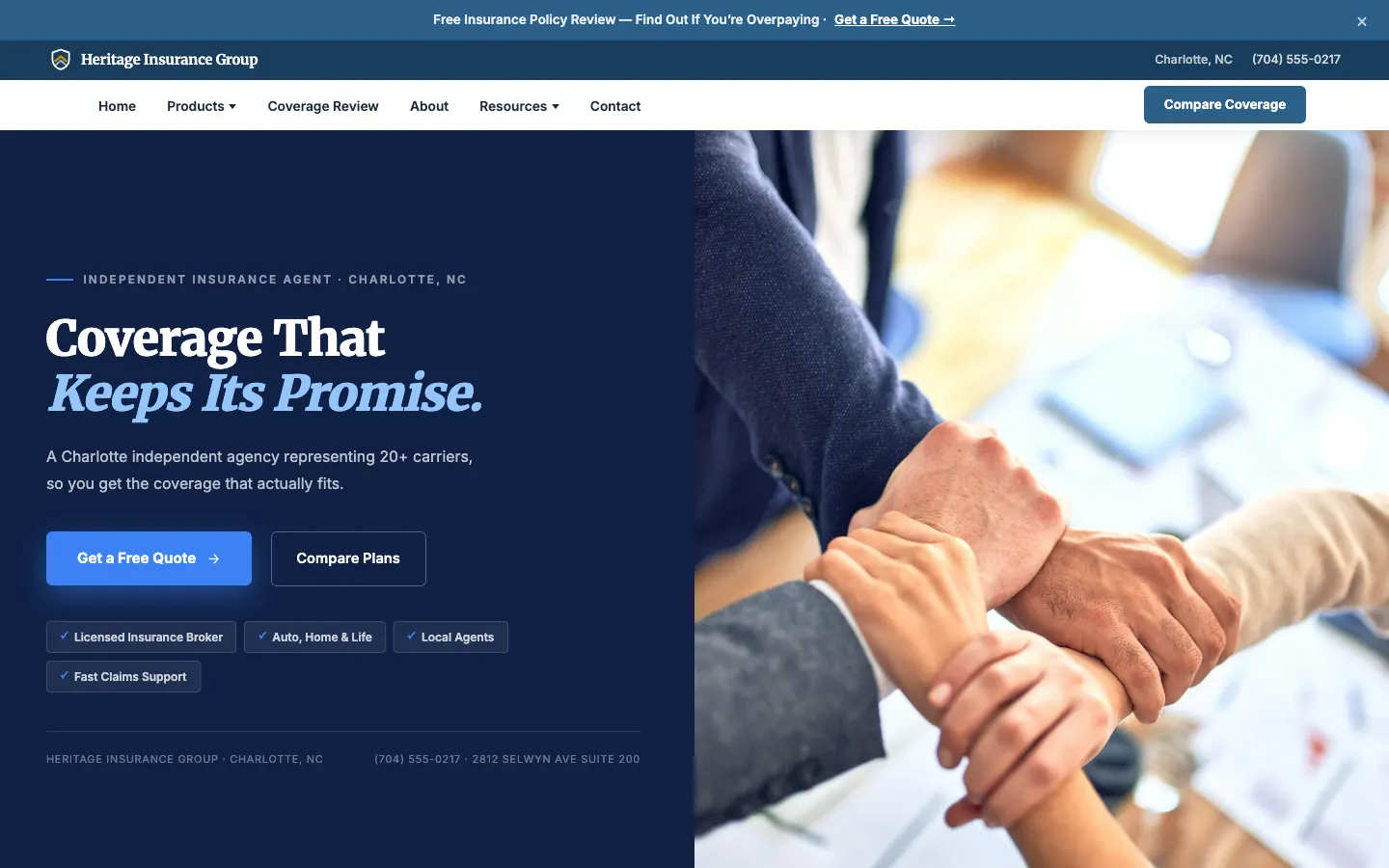
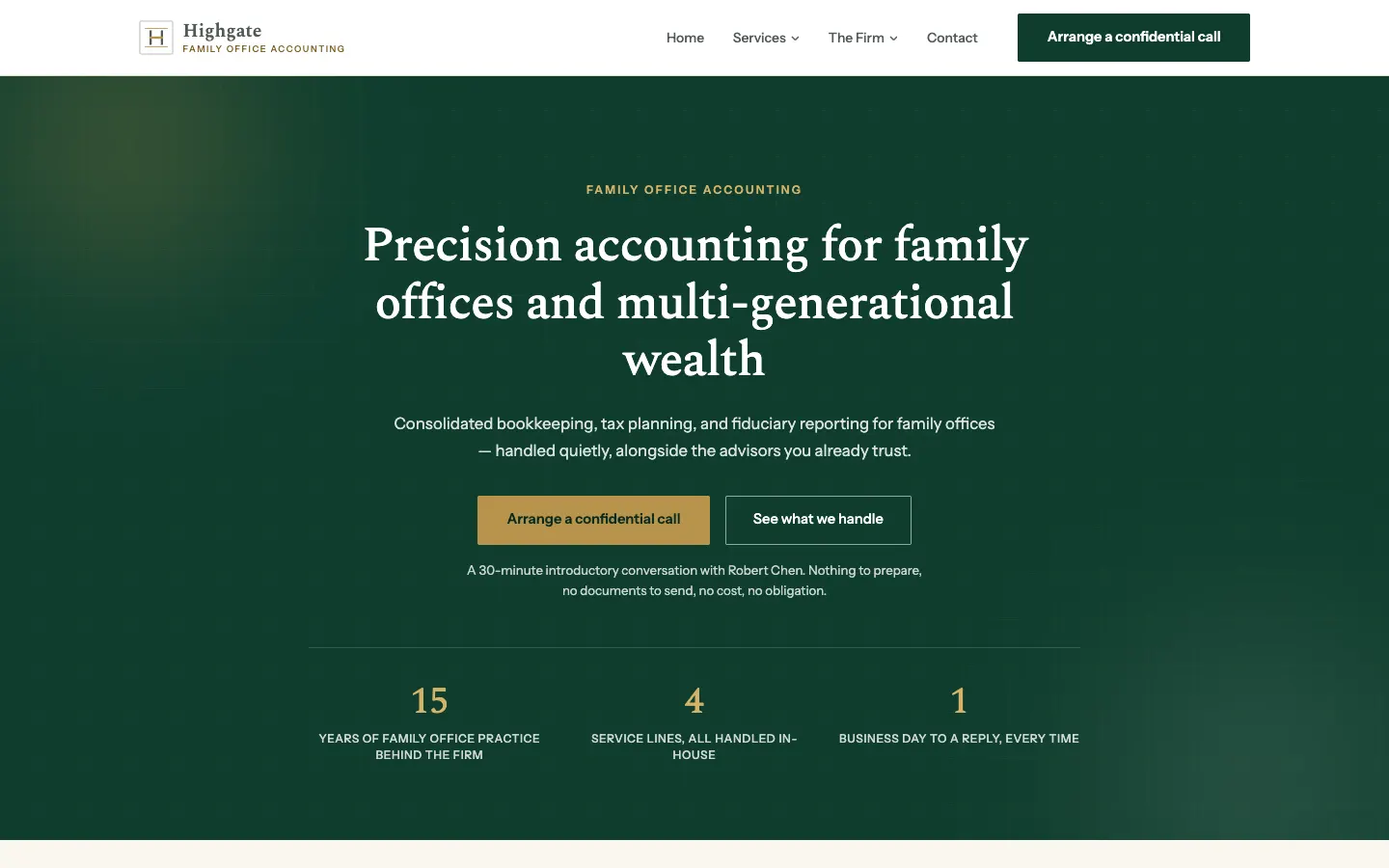
Insurance Agencies: a site we built, live right now.
Open any of these and use it. They run on WorkspaceCMS, on their own domains, at the speed and structure a client gets. The businesses are invented, because these are demonstration builds rather than client sites.

Free website build
We build the site. You run it on a plan.
Start a 12-month WorkspaceCMS plan and we design and build your website from scratch at no cost. The build is included. The platform runs on a monthly plan, and the page count scales with the tier.
What Is Different Here
Why insurance agencies do not market like everyone else.
Two very different books share one office. Personal lines is a price shopping market where national carriers and comparison sites spend heavily and a visitor decides in minutes. Commercial lines is an advice market where a contractor needs a certificate by Friday and cares far more about whether you understand their trade than about the premium.
The renewal date is the real calendar. A prospect nine months from their expiration date is not moving, however sharp the quote. Agencies that grow treat the expiration date as the thing to capture, then build follow up around it, instead of judging a campaign by how many quote forms arrived this month.
Carrier appointments decide what you can even sell. An agency appointed for restaurants, habitational or trucking has a different marketing story from one writing mostly home and auto. Marketing that ignores the appointment list generates quotes nobody can place, which burns producer hours and teaches the team to distrust every lead that follows.
What Gets In The Way
The problems that actually cost you revenue.
Aggregators outspend you on personal lines
Comparison sites and direct carriers dominate generic auto and home queries, then sell the same shopper to several agencies at once. An independent agency cannot outbid that on volume. The realistic play is bundled and non standard risk, local trust signals, and the coverage questions a quote engine never answers.
Quote forms ask for too much too early
A long form demanding VINs, prior carrier and effective dates loses people still deciding whether to talk to you at all. Abandoned forms then look like weak traffic when the form is the actual problem. What an agency needs first is a contact, the line of business, and the current expiration date.
Commercial prospects search by their trade
A roofing contractor searches for roofing contractor insurance, not for business insurance. A restaurant owner searches for liquor liability. Agencies with one commercial page miss all of it. Each trade you are appointed to write deserves a page in its own language, including the certificate and additional insured questions producers hear weekly.
Reviews skew toward claims frustration
People rarely review an agency after a smooth renewal. They review after a claim, and claims decisions belong to the carrier rather than to you. Without a deliberate review process tied to service moments, the public record ends up written by the few clients who had the worst month of their year.
How We Work
What we do about it.
A page per line of business and trade
We map your carrier appointments to the searches that match them, then build a page for each: general liability by trade, workers compensation, commercial auto, habitational, plus the personal lines you actively want. Every page names the coverage questions producers hear and the documents a buyer has been asked to produce.
Capture the expiration date, not just a quote
Forms and phone scripts are built to record the current carrier and renewal date, so a prospect who cannot move today enters a sequence that reaches them before their window opens. Early interest becomes a scheduled conversation instead of a dead record sitting in the agency management system.
Local visibility and service reviews
Google Business Profile management, a page for each office with real staff and hours, and review requests triggered by service moments such as a policy review or a certificate turned around within the hour. That builds a public record about how you work, which is the part no aggregator quote can address.
Services
The disciplines behind it.
Search Engine Optimization
Own the searches your buyers actually make, at any scale.
Learn moreLocal and Multi-Location SEO
Win the map pack in one market or in two hundred.
Learn morePaid Media and Google Ads
Demand you can turn on today, measured to the lead.
Learn moreContent Marketing and Digital PR
Content that ranks, gets cited, and earns links.
Learn moreWeb Design and Conversion
Fast, conversion-first sites, built and then actually maintained.
Learn moreAI and Answer Engine Optimization
Get cited by ChatGPT, Claude, Perplexity and Gemini.
Learn moreQuestions
What insurance agencies ask us first.
If yours is not here, a free strategy call is the fastest way to get a specific answer about your market and your numbers.
Book a Free CallHow do independent agencies compete with direct carriers online?
Not on price advertising, and not on generic auto and home terms. Independent agencies win where a choice needs explaining: multiple carriers for a hard to place risk, commercial lines by trade, coverage limits a lender or landlord is demanding, and local service someone can walk into. Build content around those questions, keep your Google Business Profile active with genuine reviews, and make reaching a licensed producer effortless. Your advantage is choice and advice, so demonstrate both rather than claiming them.
What should an agency measure besides quote requests?
Track quotes bound rather than quotes requested, and track expiration dates captured. A request from someone eleven months out is not a lost lead, it is a scheduled one, and agencies that fail to record the date simply lose it. Also watch line of business mix against your carrier appointments and commission structure. A campaign producing monoline auto quotes for an agency trying to grow commercial is working very hard in the wrong direction.
Are insurance advertising rules different by state?
Yes. Each state department of insurance regulates advertising and producer licensing, covering things like using the word free, comparing carriers, implying an endorsement, and how a rate may be presented. Some states require your license number in advertising. If you write across several states, the strictest rule generally sets the standard for shared pages. We keep claims specific and verifiable, avoid implied guarantees of coverage or price, and route copy to your compliance contact before publication.
Should we build separate pages for each office location?
If an office has a real address, staff and phone number, yes. A genuine location page with its own Google Business Profile, team, hours and service area supports visibility in that market. What does not work is spinning up a page for every town in the county with the name swapped out. Those read as thin and get treated that way. Build pages where you have presence, then cover surrounding areas honestly inside those pages.
Related Industries
Close enough that the playbook overlaps.
Financial Advisors
Marketing an advisory practice inside SEC and FINRA ad rules, built around referrals and life events.
Mortgage Brokers
Marketing a brokerage through rate swings and Reg Z ad rules, with referral partners doing real work.
Accounting and CPA Firms
Search and content for CPA firms shifting from seasonal compliance work to year-round advisory.
Selling online instead?
This practice is built for service businesses, firms, practices and B2B. If your revenue comes from an online store, the 1Digital Agency eCommerce team has run ecommerce SEO, paid media and platform work since 2012 and is the better fit.
Markets
Where we work with insurance agencies.
Grow your business with 1Digital.
Get a free audit and a written scope built for insurance agencies.