Free strategy call and written scope for local, regional and national brands. Book yours →

Home / Industries / Real Estate and Property / Real Estate Brokerages
Local and regional
Real Estate Brokerages marketing.
A brokerage sells listings to the public and a business model to agents. Both funnels live on the same site, and both have to work.
How do you market real estate brokerages?
A brokerage markets on two funnels at once. The consumer side runs on IDX listing pages, neighborhood and school area content, agent profiles and seller focused valuation offers, all written under fair housing rules that restrict the copy and the ad targeting. The recruiting side sells splits, tools, training and lead flow to agents, and needs its own pages and its own follow up.
See It Working
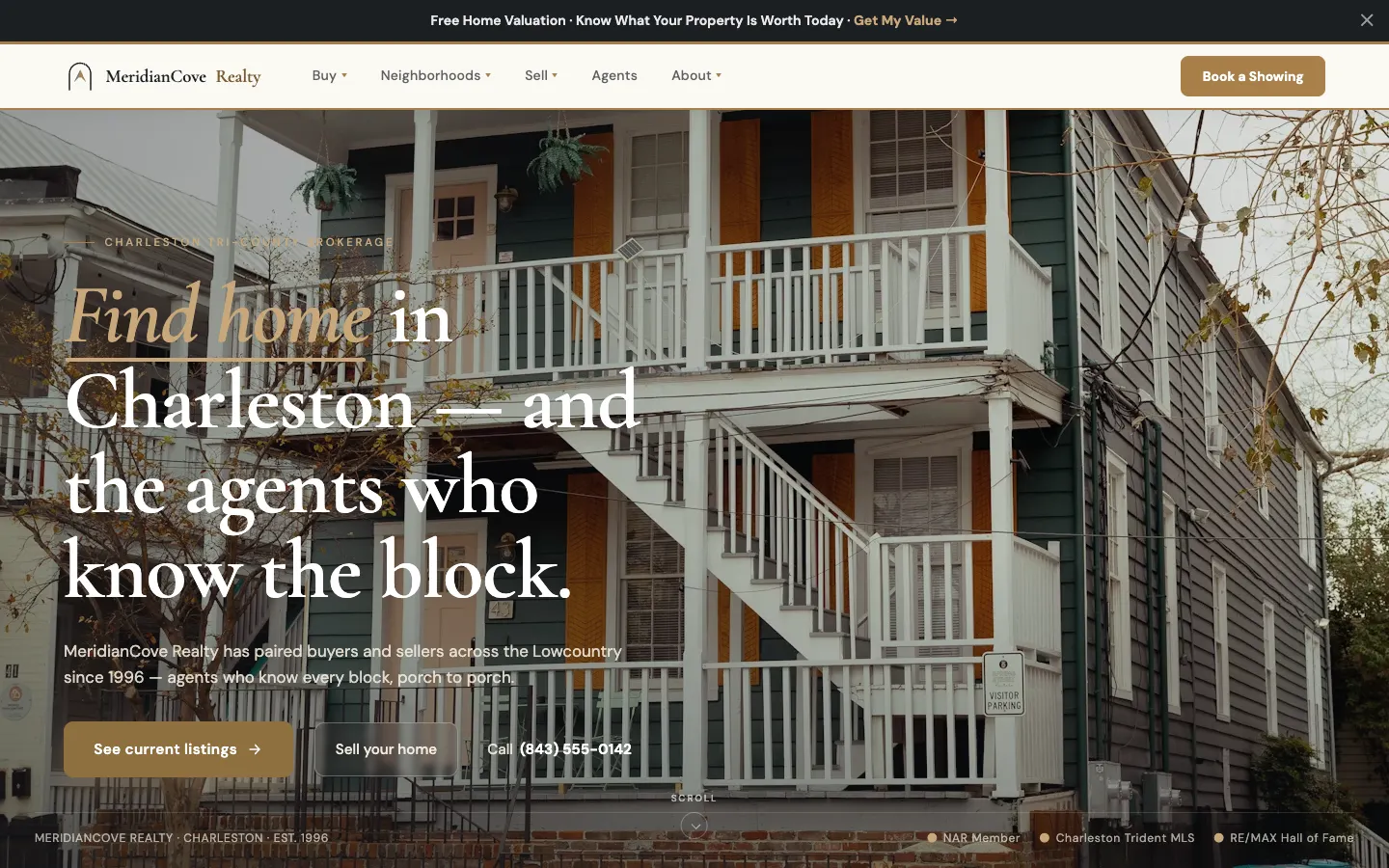
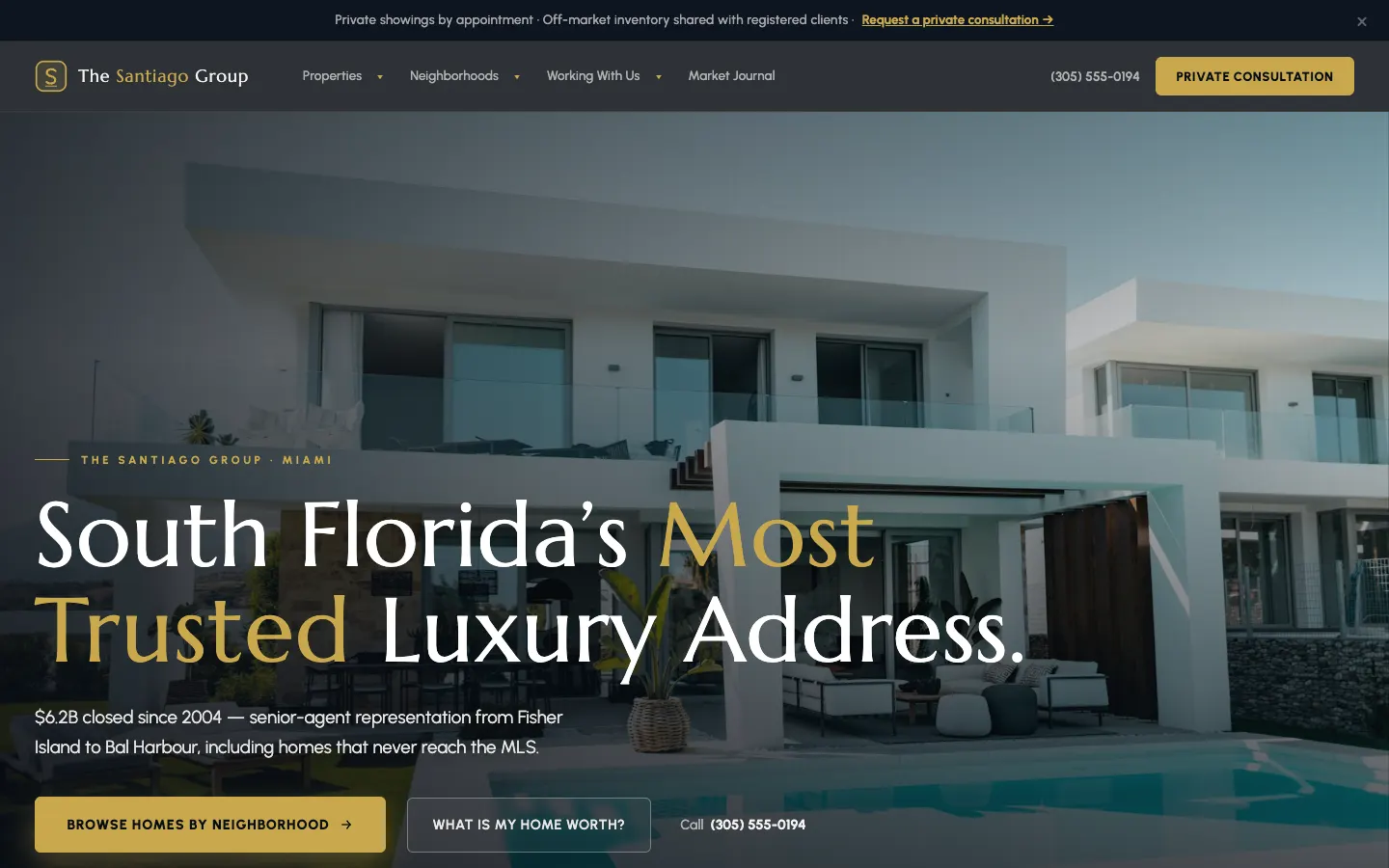
Real Estate Brokerages: a site we built, live right now.
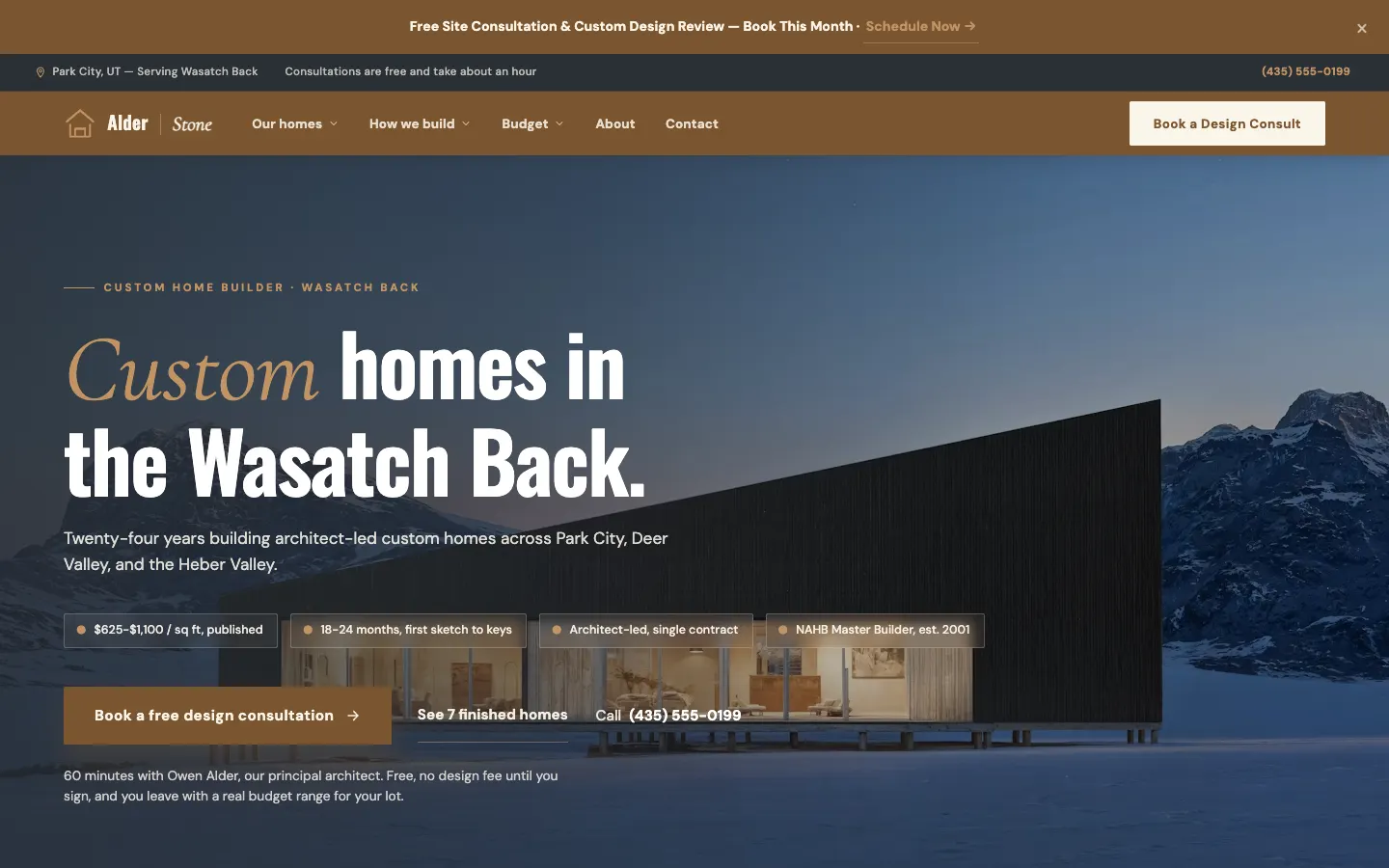
Open any of these and use it. They run on WorkspaceCMS, on their own domains, at the speed and structure a client gets. The businesses are invented, because these are demonstration builds rather than client sites.
Free website build
We build the site. You run it on a plan.
Start a 12-month WorkspaceCMS plan and we design and build your website from scratch at no cost. The build is included. The platform runs on a monthly plan, and the page count scales with the tier.
What Is Different Here
Why real estate brokerages do not market like everyone else.
Portals took the top of the funnel and are not giving it back. Consumers start at Zillow, Redfin or Realtor.com, so a brokerage competing head on for generic homes for sale traffic is renting attention at a poor price. What a brokerage can own is hyperlocal: a neighborhood, a building, a school zone, a question about one specific street.
The seller side is the profitable side and behaves differently from the buyer side. A seller researches for months before listing, reads about pricing and timing, quietly checks what neighbors sold for, and asks people they know. A valuation offer catches that person early, but only if the follow up is human rather than an automated estimate and then silence.
Then there is the second business. Brokerages grow by recruiting and retaining agents, and an agent evaluates a brokerage like a job and a franchise at the same time: split, cap, lead flow, training, technology, brand. That evaluation happens on your website, usually late at night, and most brokerage sites say nothing about it at all.
What Gets In The Way
The problems that actually cost you revenue.
Fair housing limits copy and targeting
Listing and ad language cannot reference protected classes or imply a preferred type of buyer, which rules out phrasings agents use casually about families, walkability to a place of worship, or a safe neighborhood. Housing is also a special ad category on the major platforms, so audience targeting is deliberately restricted for everyone.
IDX pages become thin duplicates
An IDX feed produces thousands of pages that also exist on every other brokerage site in the market. Without original neighborhood context, local market commentary and genuine agent input, those pages compete against identical copies and add nothing. Feed configuration and indexing choices matter as much as the design does.
Agent recruiting has no funnel
Brokerages spend on consumer marketing and recruit agents through personal conversations and job boards. There is rarely a page explaining the split structure, the technology stack, onboarding, the training calendar or the leads an agent can expect. So the entire pitch depends on who happens to be in the room.
Agent turnover takes the content with it
Profiles, listing pages, posts and neighborhood guides are often tied to an individual agent. When that agent leaves, the brokerage either keeps pages for someone no longer there or deletes hard earned visibility. Neither outcome is good, and both are avoidable with clear ownership of content and URLs.
How We Work
What we do about it.
Hyperlocal pages the portals will not write
Neighborhood, subdivision and building level pages with real market context, what turnover looks like there, what buyers ask, and which agents work that area. That is ground where a local brokerage can outperform a national portal, because the portal brings scale and you bring specifics nobody else has.
A seller path that starts before listing
Valuation offers connected to genuine follow up, plus content on pricing, timing, preparation and the buyer representation conversation sellers now expect to have. The aim is simple: be the brokerage a homeowner has already been reading for four months when they finally decide to list.
A recruiting site inside your site
Dedicated pages for agents considering a move: how splits and caps work, technology and lead sources, training, marketing support, and a discreet way to start a conversation. It gives leadership something to send, and it keeps working when nobody is in the room.
Services
The disciplines behind it.
Search Engine Optimization
Own the searches your buyers actually make, at any scale.
Learn moreLocal and Multi-Location SEO
Win the map pack in one market or in two hundred.
Learn morePaid Media and Google Ads
Demand you can turn on today, measured to the lead.
Learn moreContent Marketing and Digital PR
Content that ranks, gets cited, and earns links.
Learn moreWeb Design and Conversion
Fast, conversion-first sites, built and then actually maintained.
Learn moreAI and Answer Engine Optimization
Get cited by ChatGPT, Claude, Perplexity and Gemini.
Learn moreQuestions
What real estate brokerages ask us first.
If yours is not here, a free strategy call is the fastest way to get a specific answer about your market and your numbers.
Book a Free CallHow can a brokerage compete with Zillow and Realtor.com?
Not on generic searches for homes for sale. The portals have national scale and a budget no brokerage can match. Local firms win where specificity matters: a named neighborhood, a condo building, a school attendance area, a market update nobody else bothers to write, and agents with real profiles and reviews. Sellers are the better target because they research locally and choose a person rather than a portal. Use IDX for the buyer experience and original local content for visibility.
What language is not allowed in real estate listing copy?
Fair housing rules prohibit statements indicating a preference or limitation based on protected classes. In practice that rules out common phrasing about families and children, religious institutions used as selling points, and subjective safety claims about a neighborhood. Describe the property, not the buyer you are imagining. Housing is also a special ad category on the major platforms, restricting targeting by age, gender and location radius. We build these constraints into copy templates and brief the people writing listings.
Should we build a separate site for agent recruiting?
Usually a dedicated section rather than a separate domain. A section inherits your brand and existing authority, and it lets a curious agent move between the consumer site and the recruiting pages without leaving. Give it a navigation entry, pages for splits, technology, training and onboarding, and a private contact path, because agents research employers quietly while still under contract elsewhere. A separate domain only makes sense for a distinct brand with its own market position.
Do agent profile pages actually generate business?
They do, and they are among the most visited pages on a brokerage site, because anyone who receives a referral looks that person up before calling. A profile carrying reviews, areas served, recent activity, languages spoken and a direct contact path converts far better than a headshot with a paragraph underneath. Keep the URLs and content under brokerage control so a departure does not remove pages that took years to earn their visibility.
Related Industries
Close enough that the playbook overlaps.
Property Management
Two audiences, one company: owners deciding who manages the door, and residents deciding where to lease.
Title and Escrow
Title marketing sells to agents and lenders, not to buyers. The referrer is the customer.
Mortgage Brokers
Marketing a brokerage through rate swings and Reg Z ad rules, with referral partners doing real work.
Selling online instead?
This practice is built for service businesses, firms, practices and B2B. If your revenue comes from an online store, the 1Digital Agency eCommerce team has run ecommerce SEO, paid media and platform work since 2012 and is the better fit.
Markets
Where we work with real estate brokerages.
Grow your business with 1Digital.
Get a free audit and a written scope built for real estate brokerages.