Free strategy call and written scope for local, regional and national brands. Book yours →

Home / Industries / Home Services and Trades / Restoration and Water Damage
Local and regional
Restoration and Water Damage marketing.
Restoration is bought under stress and paid by a carrier. The marketing has to reach the homeowner, the adjuster and the referral source at once.
How do you market restoration and water damage?
Restoration marketing has three audiences, not one. The homeowner in crisis needs a phone answered at 3am, a page explaining what happens in the first 24 hours, and reassurance about insurance. The referral network of plumbers, roofers, property managers and agents needs relationship work, because a large share of jobs arrive as a recommendation. Adjusters and carriers need documentation quality and certifications like IICRC. Content explaining coverage, deductibles and the claim process serves all three at once.
See It Working
Sites we built for businesses like yours.
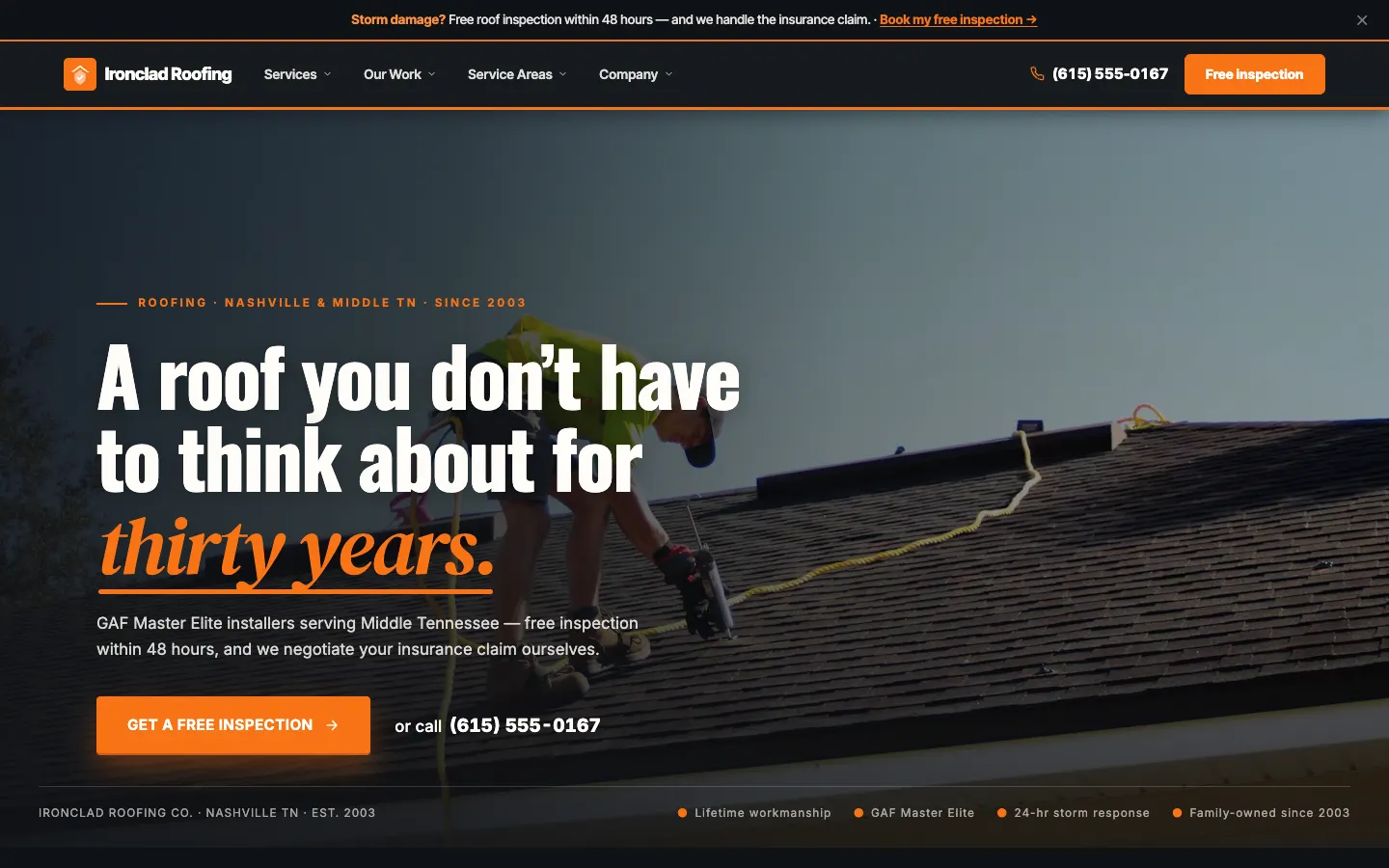
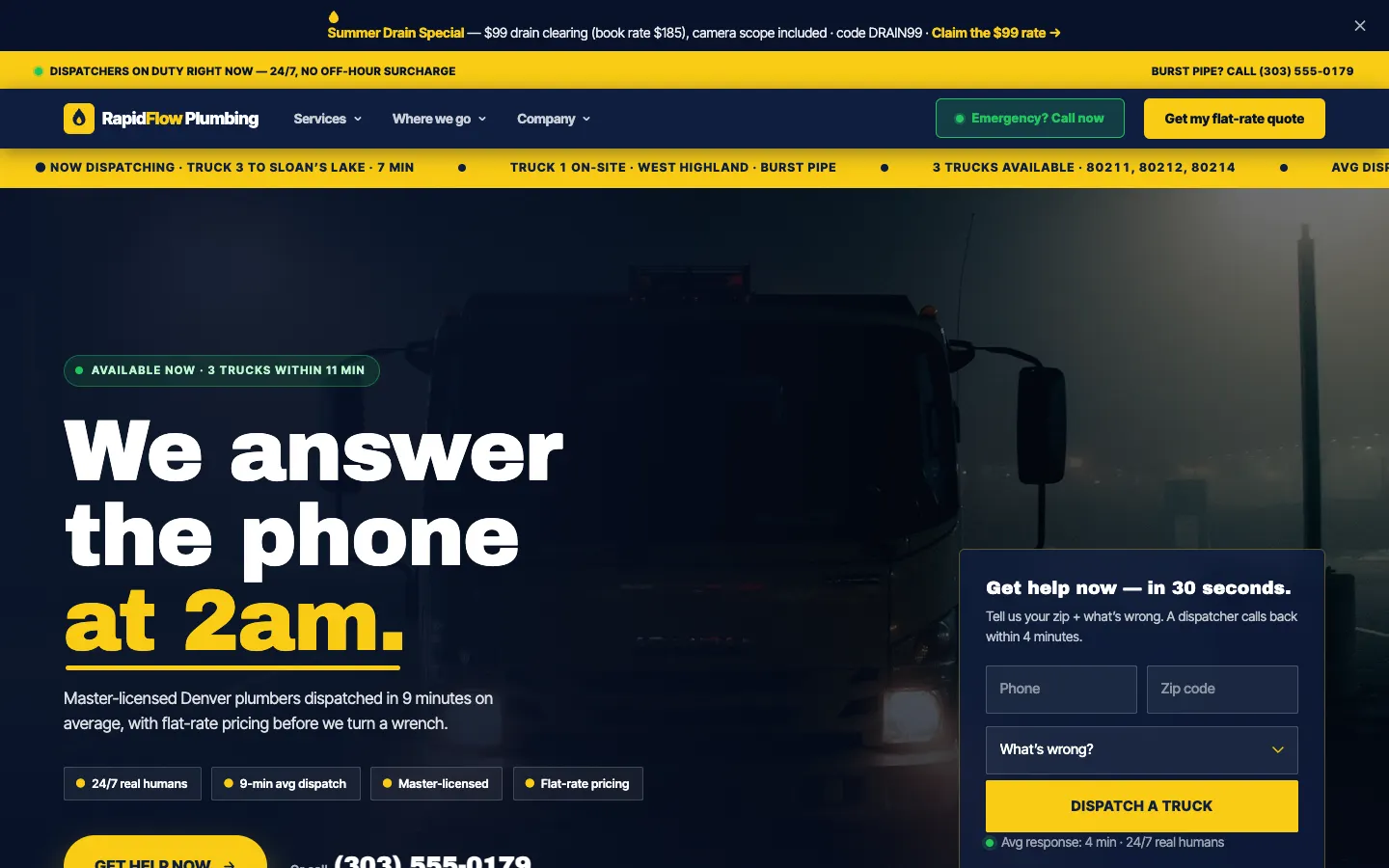
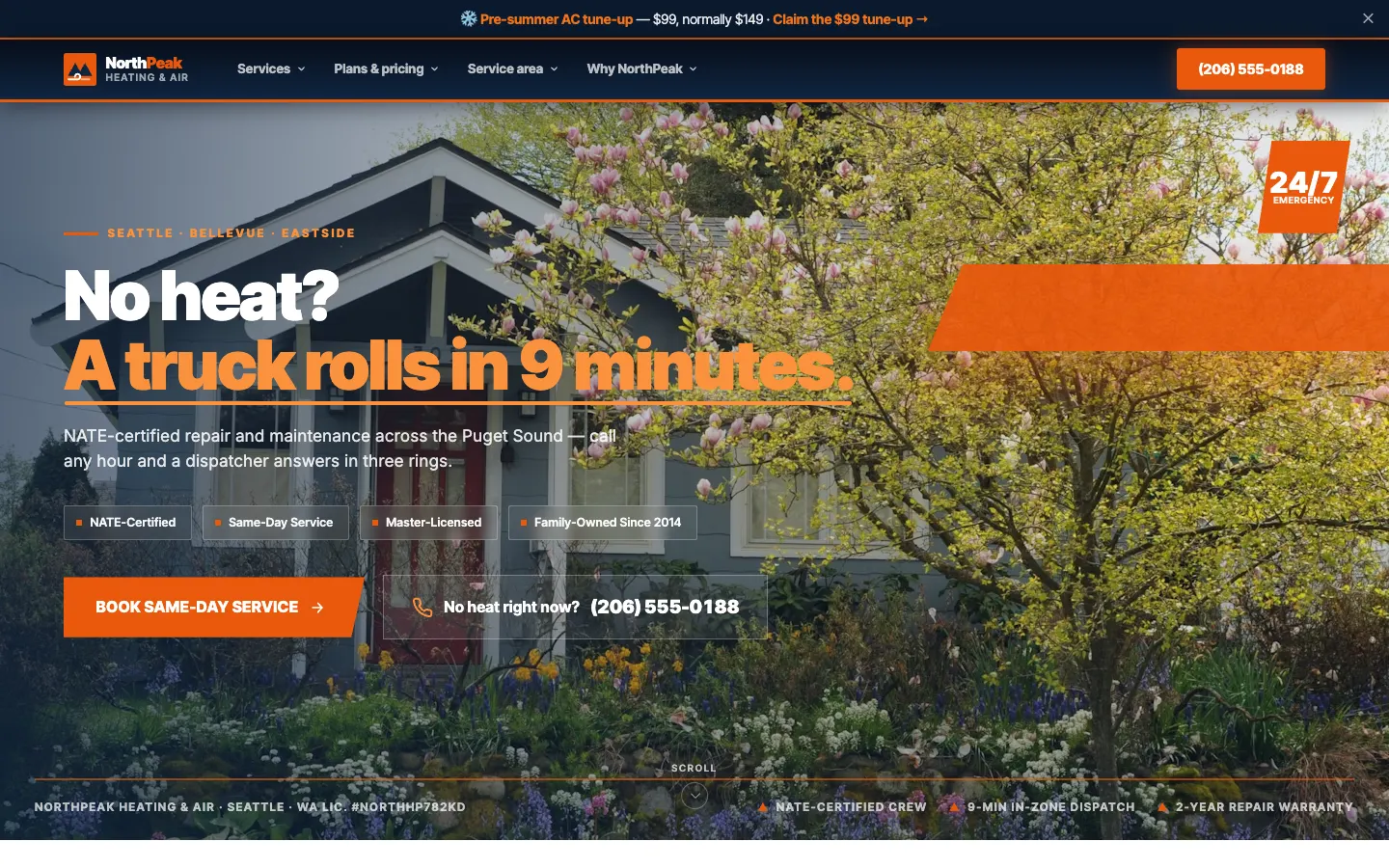
Open any of these and use it. They run on WorkspaceCMS, on their own domains, at the speed and structure a client gets. The businesses are invented, because these are demonstration builds rather than client sites.
Free website build
We build the site. You run it on a plan.
Start a 12-month WorkspaceCMS plan and we design and build your website from scratch at no cost. The build is included. The platform runs on a monthly plan, and the page count scales with the tier.
What Is Different Here
Why restoration and water damage do not market like everyone else.
The homeowner calling you has water spreading across a floor at midnight, or has just come home to smoke damage. They are not evaluating vendors. They are frightened, they do not know if their policy covers this, and they will do whatever the first competent voice tells them. That emotional state is the defining feature of this category and nothing about it resembles booking a plumber for a slow drain.
Payment does not come from the person who called you. It comes from a carrier, through an adjuster, against documentation, scope and pricing standards. That makes restoration a business with a customer who is not the payer, a scope negotiated with a third party, and revenue that depends on documenting moisture readings, drying logs and photographs as much as on the work itself.
Which is why the referral network is often worth more than the search results. Plumbers who find a burst supply line, roofers who open a ceiling, property managers with a flooded unit, insurance agents fielding a panicked call, all of them recommend someone. Those relationships deliver jobs before a homeowner ever searches, and they are the most defensible asset a restoration company can build.
What Gets In The Way
The problems that actually cost you revenue.
The buyer is in crisis, not in market
Someone standing in three inches of water is not comparing companies. They want the panic to stop. Marketing that reads like a normal service pitch misses the moment entirely. What works is calm, immediate clarity: we answer now, we arrive in this window, here is what happens first, here is what your insurance likely does.
The carrier decides what gets paid
Scope disputes, pricing standards, supplements and coverage limits all sit between the work performed and the money received. A company that documents poorly gets underpaid regardless of how good the mitigation was. That reality shapes what the homeowner needs to be told and what the adjuster needs to see.
Referral sources are the real channel
Plumbers, roofers, agents and property managers route a large share of this work, and those relationships are largely invisible to digital marketing. A company that invests only in search is competing for the fraction of jobs where nobody made a recommendation, which is also the most crowded fraction.
Demand arrives in catastrophic bursts
A freeze event, a hurricane or a regional storm produces months of revenue in a week, then nothing. National franchises and out of area crews mobilise into the same market. Capacity, not lead volume, becomes the constraint, and quiet months in between still have to be funded.
How We Work
What we do about it.
Write for the first twenty minutes
A page that tells someone what to do right now: shut off water here, move what you can, do not enter standing water near electrical, document with photos before anything is removed, call your carrier. It ranks for genuine emergency searches, it gets cited by AI assistants answering panicked questions, and it establishes competence before the truck arrives.
Explain insurance without overstepping
What mitigation coverage typically includes, how deductibles apply, why a carrier expects immediate action to prevent further damage, what documentation supports a claim, and what a supplement is. Written carefully and within the limits of what a contractor may advise, this is the most searched and least clearly answered subject in the category.
Market to the referral network directly
A dedicated track for plumbers, roofers, property managers and agents: response commitments, certifications, documentation standards, and how a referral is handled so their client comes back happy. Supported by outreach and content aimed at them rather than at homeowners. This is where durable pipeline is built, and it survives between catastrophes.
Services
The disciplines behind it.
Search Engine Optimization
Own the searches your buyers actually make, at any scale.
Learn moreLocal and Multi-Location SEO
Win the map pack in one market or in two hundred.
Learn morePaid Media and Google Ads
Demand you can turn on today, measured to the lead.
Learn moreContent Marketing and Digital PR
Content that ranks, gets cited, and earns links.
Learn moreWeb Design and Conversion
Fast, conversion-first sites, built and then actually maintained.
Learn moreAI and Answer Engine Optimization
Get cited by ChatGPT, Claude, Perplexity and Gemini.
Learn moreQuestions
What restoration and water damage ask us first.
If yours is not here, a free strategy call is the fastest way to get a specific answer about your market and your numbers.
Book a Free CallDoes search marketing matter if most of my work is referred?
It matters for two reasons beyond direct leads. First, when a plumber recommends you, the homeowner looks you up before they call, and a weak profile with old reviews undermines the referral you just earned. Second, the emergency searches that do happen are among the highest intent in local search, and they are the jobs nobody handed to a competitor. Treat search as the credibility layer under your referral network rather than a replacement for it.
How much can I say about insurance on my website?
You can explain the process clearly: what mitigation coverage generally covers, how deductibles work, why carriers expect prompt action, what documentation supports a claim, and what to expect from an adjuster visit. Be careful about anything that reads as advising on a specific claim or acting on the policyholder's behalf, because several states regulate that closely and public adjusting is a licensed activity. Written within those limits, this content is genuinely useful and it is what people search for at 2am.
How do I build referral relationships from plumbers and roofers?
By making the referral safe for them. Their concern is that recommending you reflects on their own relationship with that client. So commit to response times, communicate back to the referring trade about what happened, handle the documentation professionally, and never poach adjacent work you were not asked to do. Support it with material written for them rather than for homeowners: certifications, response commitments, and how you handle the claim side. Then show up consistently, because this is earned in person and reinforced online.
How do I stay visible between catastrophic events?
Fund the quiet months with the work that happens regardless: appliance leaks, supply line failures, sewage backups, mold remediation, small fire and smoke jobs. Keep content and local presence live rather than going dark, because a profile that has been dormant for four months performs badly the moment an event hits. And use the quiet period for referral relationship building and documentation improvements, which are exactly the things you have no time for during a surge.
Related Industries
Close enough that the playbook overlaps.
Plumbers
Burst pipe calls, drain jobs and repipe quotes are three different buyers. Market them separately.
Roofing Contractors
Storm surges, insurance claims and a five-figure ticket that takes weeks to close.
Insurance Agencies
Marketing an agency around renewal dates, carrier appointments and quote forms people actually finish.
Selling online instead?
This practice is built for service businesses, firms, practices and B2B. If your revenue comes from an online store, the 1Digital Agency eCommerce team has run ecommerce SEO, paid media and platform work since 2012 and is the better fit.
Markets
Where we work with restoration and water damage.
Grow your business with 1Digital.
Get a free audit and a written scope built for restoration and water damage.