Free strategy call and written scope for local, regional and national brands. Book yours →

Home / Industries / Healthcare and Medical / Chiropractic Care
Local and regional
Chiropractic Care marketing.
A person in pain searches, calls and wants to be seen the same day. Chiropractic marketing is about capturing that moment and keeping the plan intact.
How do you market chiropractic care?
Chiropractic marketing runs on same-day acute pain intent. Rank for the specific complaint, such as lower back pain or a stiff neck after a car accident, and show same-day openings on the page. Publish cash rates alongside accepted plans, because coverage limits are low and many patients pay directly. Reviews and proximity drive the click. Retention across a multi-visit care plan is where the practice actually makes its money.
See It Working
Chiropractic Care: a site we built, live right now.
Open any of these and use it. They run on WorkspaceCMS, on their own domains, at the speed and structure a client gets. The businesses are invented, because these are demonstration builds rather than client sites.

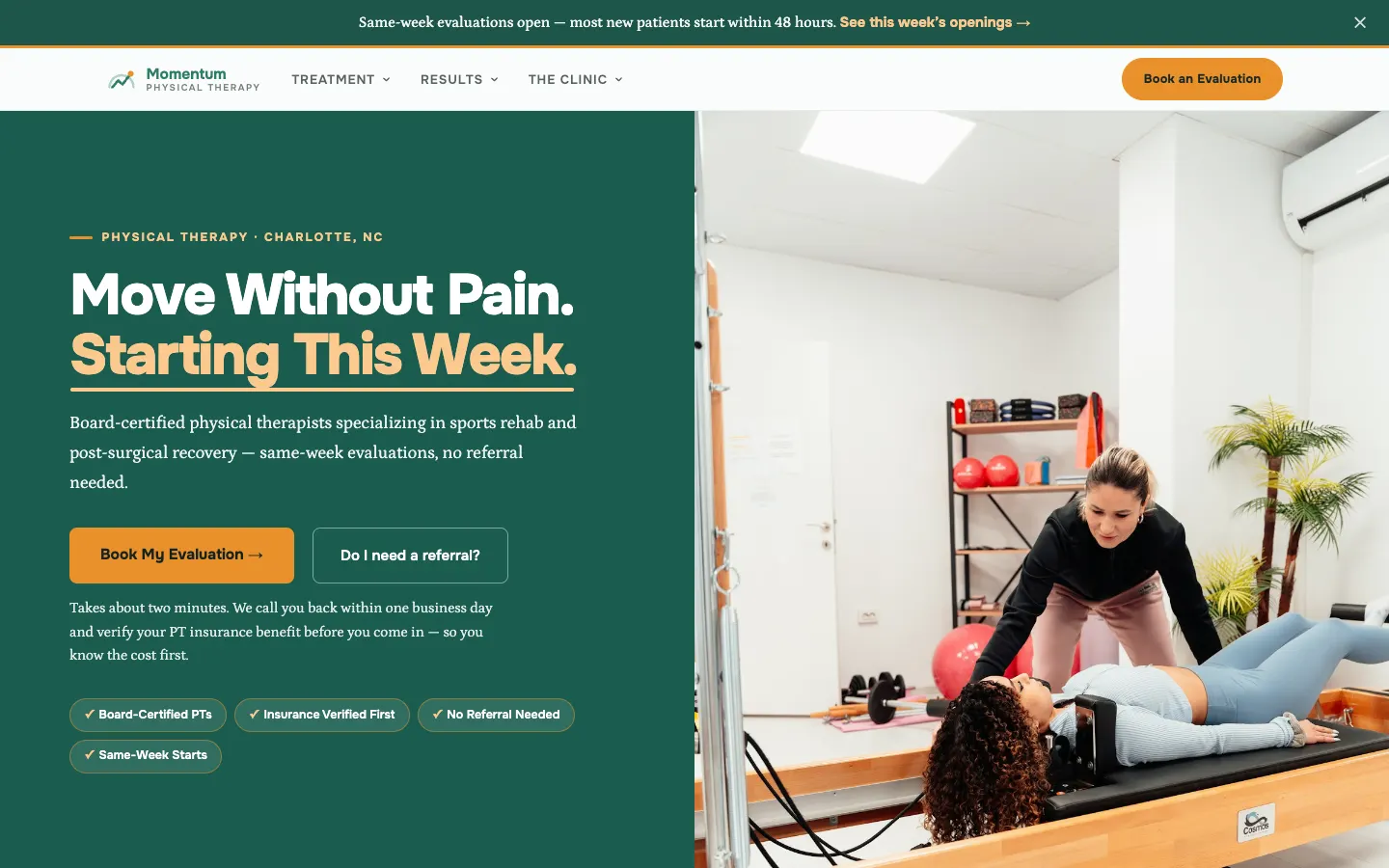
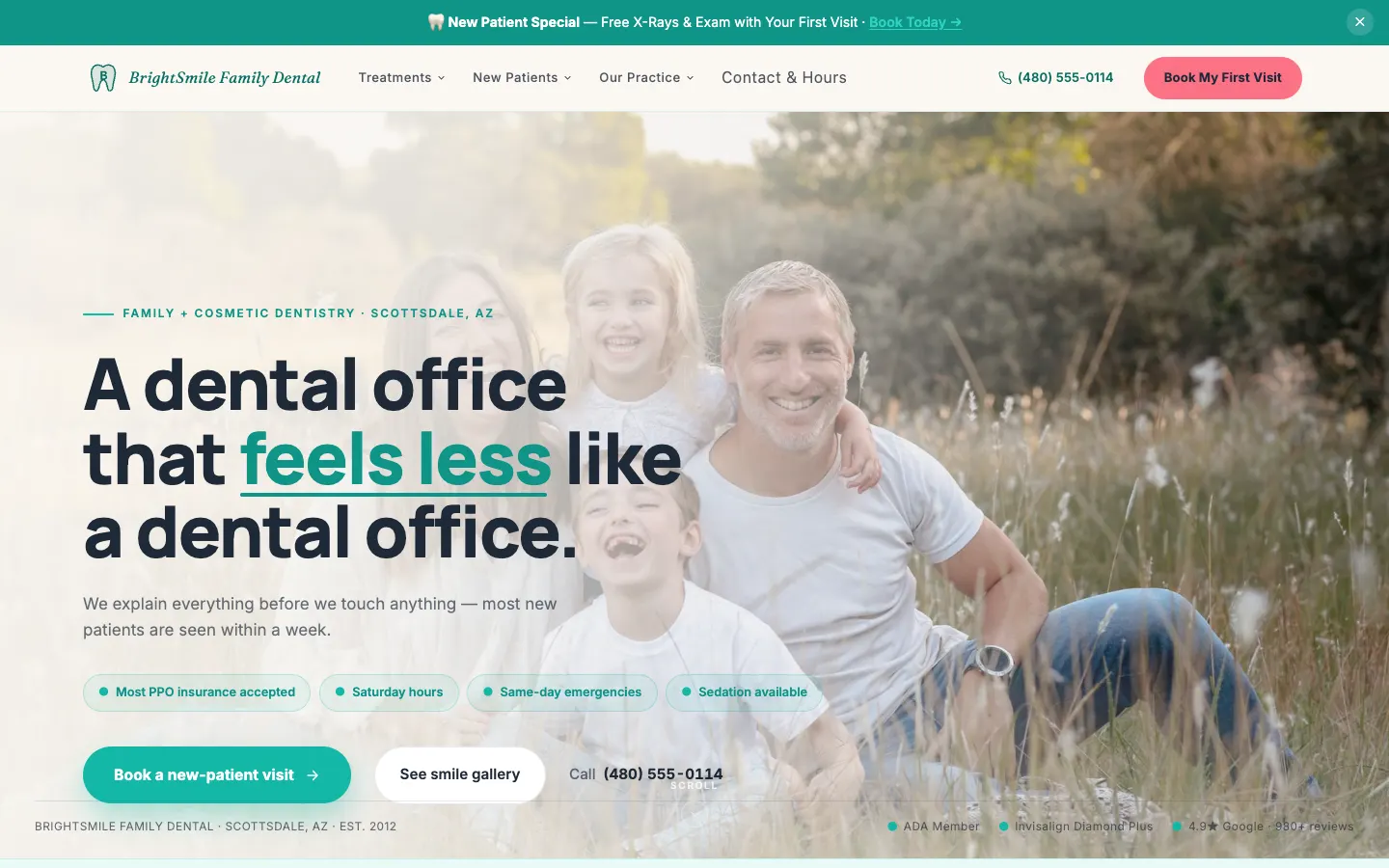
Free website build
We build the site. You run it on a plan.
Start a 12-month WorkspaceCMS plan and we design and build your website from scratch at no cost. The build is included. The platform runs on a monthly plan, and the page count scales with the tier.
What Is Different Here
Why chiropractic care do not market like everyone else.
Someone wakes up unable to turn their head and searches on a phone before they have had coffee. That is the buying trigger in this category, and it has a short fuse. They will call two or three practices, take whoever can see them today, and never think about the other two again. Speed of response beats almost every other marketing variable a chiropractic office can control.
Insurance is a partial answer at best. Many plans cap chiropractic visits at a low number, some patients have no coverage for it, and personal injury cases run on an entirely different payment path. That makes cash pricing a normal part of the conversation, which is unusual in healthcare and makes chiropractic sites that hide rates conspicuously unhelpful.
The revenue is in the plan, not the first visit. An adjustment today is worth little on its own. A patient who completes a course of care and then returns for maintenance is the entire economic model. So retention content, reactivation for patients who dropped off after three visits, and clear expectation setting about how many visits a complaint usually takes belong in the marketing programme, not just in the treatment room.
What Gets In The Way
The problems that actually cost you revenue.
Same-day capture or nothing
Acute pain intent expires in an afternoon. A missed call at lunchtime, a contact form that gets answered tomorrow or a booking page with no openings this week all lose the patient outright. Most practices have no idea how many of these they lose because the enquiry never became a record.
Personal injury changes the whole funnel
A patient from a car accident arrives through attorney referral or a very different search, is paying under a claim, and needs documentation the practice may not be set up to produce. Mixing this into general wellness marketing confuses both audiences and can attract case types the practice does not want.
Coverage limits stall the care plan
A patient begins a twelve visit plan, exhausts their covered visits at eight, and disappears. The practice reads it as poor retention. It was a payment surprise nobody set expectations about, and it is entirely preventable with honest cost information before treatment starts.
Trust is contested before you are found
Chiropractic faces skepticism that most healthcare categories do not. Prospective patients search whether it works and read mixed material before they ever reach your site. Practices that ignore that conversation lose people who were genuinely willing to be convinced by evidence-based, plainly written content.
How We Work
What we do about it.
Rank for the complaint, then close it fast
Pages for the specific pain a person types, not a generic services list. Each one carries same-day availability, click-to-call on mobile and online booking with real times. We add call tracking with missed call alerts, because the first fix in this category is almost always the phone.
Publish cash rates next to insurance
New patient exam price, per visit rate and package pricing, alongside accepted plans and a plain note about typical visit limits. Patients decide faster with real numbers, and setting the cost expectation before visit one is the single biggest lever on care plan completion.
Separate personal injury from wellness
Its own section, its own pages and its own campaigns, with the documentation and attorney-facing information that channel requires. Kept apart from general care marketing so neither audience is confused and you can decide how much of that case volume you actually want.
Services
The disciplines behind it.
Search Engine Optimization
Own the searches your buyers actually make, at any scale.
Learn moreLocal and Multi-Location SEO
Win the map pack in one market or in two hundred.
Learn morePaid Media and Google Ads
Demand you can turn on today, measured to the lead.
Learn moreContent Marketing and Digital PR
Content that ranks, gets cited, and earns links.
Learn moreWeb Design and Conversion
Fast, conversion-first sites, built and then actually maintained.
Learn moreAI and Answer Engine Optimization
Get cited by ChatGPT, Claude, Perplexity and Gemini.
Learn moreQuestions
What chiropractic care ask us first.
If yours is not here, a free strategy call is the fastest way to get a specific answer about your market and your numbers.
Book a Free CallWhy are we getting calls but not new patients?
Usually one of three things. The call is not being answered inside a minute during business hours, and acute pain callers move on. There is no same-day or next-day slot to offer them. Or the cost question gets a vague answer and they hang up to call someone who quotes a number. Call recording tells you which one it is in about a week. This is fixable at the front desk far more often than it is fixable in the ad account.
Should we publish our cash prices?
Yes. Chiropractic sits in an unusual spot where a large share of patients pay directly, and plan coverage often runs out mid-plan. Publishing a new patient exam price, a per visit rate and package options removes the biggest hesitation before the call. It also protects retention: a patient who knew the real cost of twelve visits before starting is far more likely to finish than one who discovers it when their covered visits run out at eight.
Do we want personal injury cases from marketing?
That is a business decision to make deliberately, not a default. Personal injury cases pay differently, take longer to collect, require documentation and often come through attorney relationships rather than search. Some practices build around them and some want none. We keep the funnel separate either way, with its own pages and campaigns, so you can turn that volume up or down without disturbing your general care marketing.
How do we handle people searching whether chiropractic actually works?
Meet the question rather than ignoring it. Write plainly about what conditions your practice treats, what the current evidence supports, what a typical course of care involves and when you refer out to another provider. Your clinicians review it before it publishes, and we do not make clinical claims on your behalf. Practices that answer that search honestly convert the skeptical researcher, who is a better long-term patient than the impulse booking.
Related Industries
Close enough that the playbook overlaps.
Physical Therapy
Direct access changed the funnel. Most patients still do not know they can skip the referral.
Personal Injury Law Firms
Search and content for PI firms competing against the largest ad budgets in local search.
Gyms and Fitness Studios
Sign ups spike in January and leak all year. Retention decides whether the marketing paid off.
Selling online instead?
This practice is built for service businesses, firms, practices and B2B. If your revenue comes from an online store, the 1Digital Agency eCommerce team has run ecommerce SEO, paid media and platform work since 2012 and is the better fit.
Markets
Where we work with chiropractic care.
Grow your business with 1Digital.
Get a free audit and a written scope built for chiropractic care.