Free strategy call and written scope for local, regional and national brands. Book yours →

Home / Industries / Home Services and Trades / Pest Control
Local and regional
Pest Control marketing.
Pest control revenue lives in recurring plans, not one-off calls. We build acquisition that pays back over a contract, not a visit.
How do you market pest control?
Pest control is a subscription business wearing a service business coat. A single treatment rarely pays back the cost of acquiring the customer, so campaigns should be measured on plan enrollment and retention, not booked jobs. Target by pest and by season, since termite swarms, ant season, mosquito months and rodent activity in fall each drive distinct search spikes. Publish identification content, because most searches start with what is this bug. Then convert the one-time call into a quarterly agreement.
See It Working
Pest Control: a site we built, live right now.
Open any of these and use it. They run on WorkspaceCMS, on their own domains, at the speed and structure a client gets. The businesses are invented, because these are demonstration builds rather than client sites.
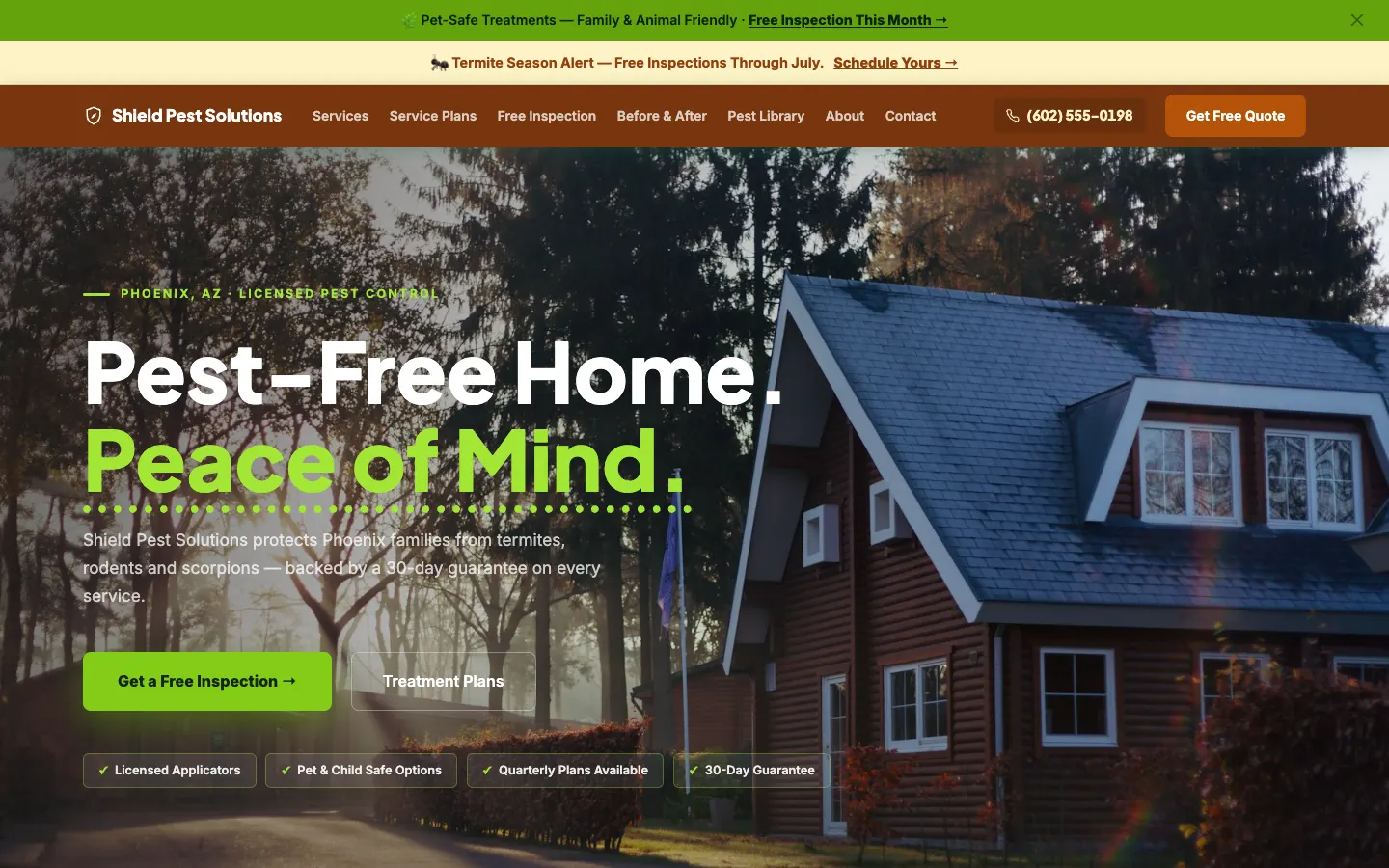
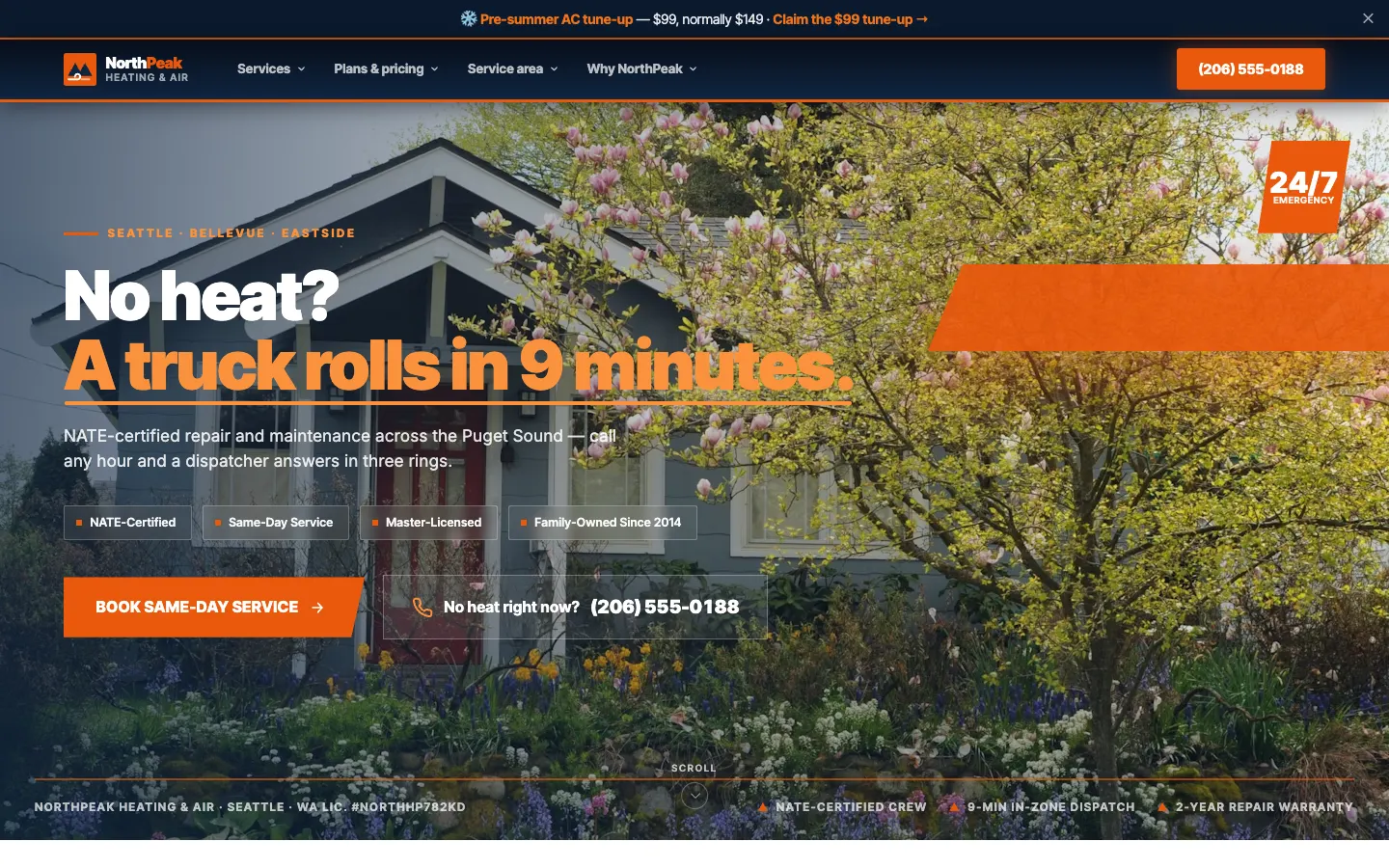
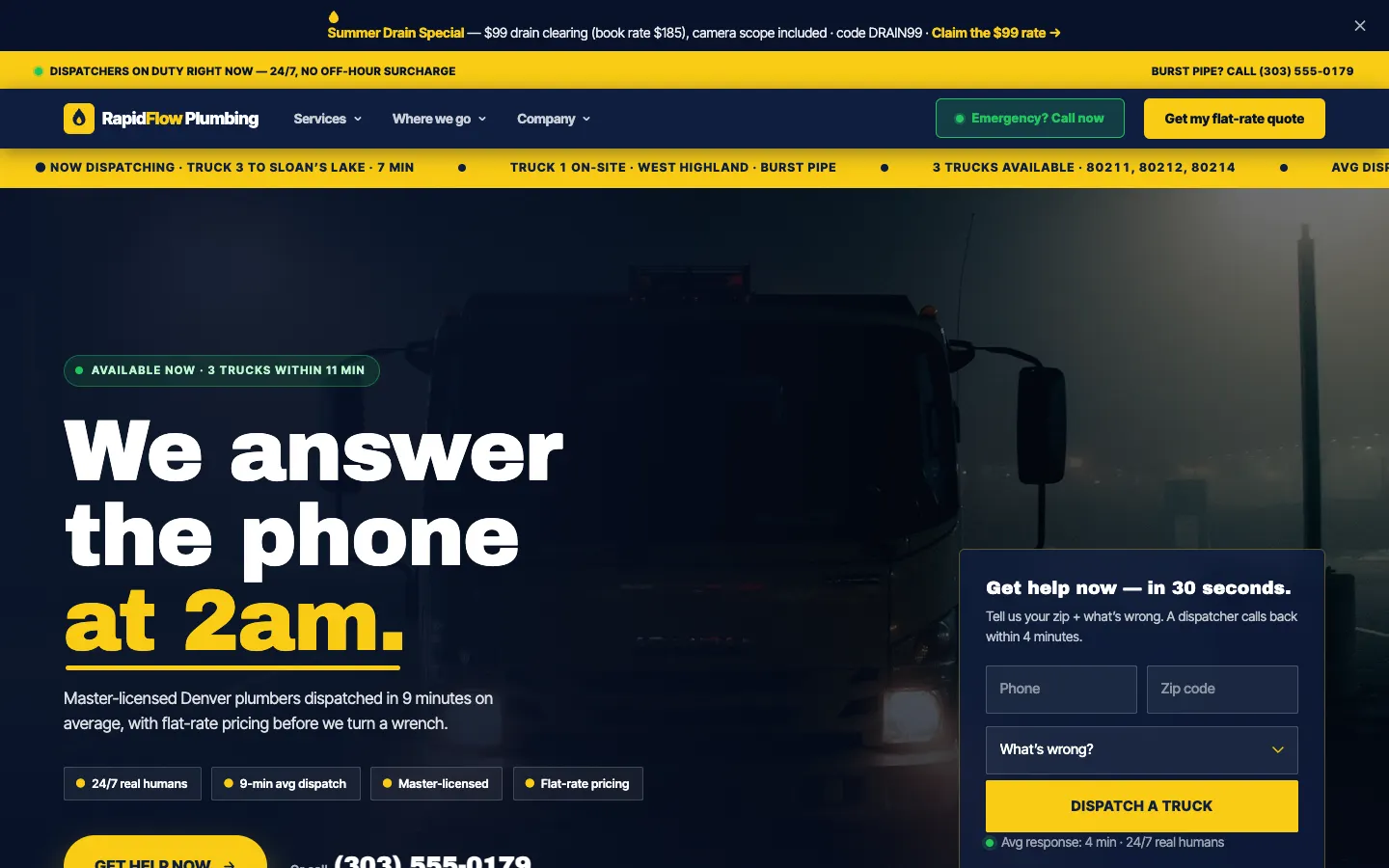
Free website build
We build the site. You run it on a plan.
Start a 12-month WorkspaceCMS plan and we design and build your website from scratch at no cost. The build is included. The platform runs on a monthly plan, and the page count scales with the tier.
What Is Different Here
Why pest control do not market like everyone else.
Almost every pest search begins with identification. Someone photographs an insect, describes what they found in a cupboard, or notices droppings, and their first question is what is this and is it dangerous. That is an information search, not a hiring search, and the company that answers it well is present at the exact moment the fear starts. Most pest control websites skip straight to book now.
The economics are what make this industry different from every other trade in the cluster. A single wasp nest removal is a small ticket. A quarterly protection plan renewed for four years is a substantial one. Acquisition cost that looks unaffordable against one treatment is comfortable against a contract, which means the marketing has to be judged on enrollment and churn rather than call volume.
Demand also arrives in sharp, predictable pulses tied to biology. Termite swarms in spring. Mosquitoes through summer. Rodents heading indoors at the first cold snap. Ants after rain. Bed bugs with no season at all but enormous emotional urgency. Each one is a different search term, a different price point and a different level of panic in the caller's voice.
What Gets In The Way
The problems that actually cost you revenue.
One-off jobs never pay back acquisition
If you measure a campaign by cost per booked treatment, almost every channel looks unprofitable. The value only appears when a customer enrolls in a recurring plan and stays for years. Marketing judged on the wrong number gets cut just as it starts working.
Demand pulses with the calendar and the weather
Termite swarm season, the first cold night driving rodents indoors, a wet week bringing ants. Each spike lasts days to weeks and drives a completely different search term. A single always-on campaign at a flat budget captures a fraction of it and overspends in the quiet stretches between.
Nobody searches for the service by name
People search what is this bug, tiny black ants in kitchen, or bed bug bites pictures. They do not search for pest control until they already know they need it. Companies that only build service pages miss the entire top of the funnel and meet the customer after a competitor has already educated them.
Churn quietly undoes the growth
New enrollments feel like progress while cancellations at the twelve month mark erase them. Retention is driven by service quality, reminder communication and whether the customer remembers what the plan does for them. Most pest control marketing spends everything on acquisition and nothing on keeping the account.
How We Work
What we do about it.
Measure on plan value, not per job
We track enrollment rate, plan mix and retention alongside lead volume, so channel decisions are made against contract value rather than a single treatment ticket. That usually justifies spending more per lead than a one-off model allows, which is exactly how competitors get outbid for the best keywords.
Build the identification library
Pages for each common pest in your region: identification photos, what the signs mean, health and structural risk, what treatment involves, whether it is a DIY problem or not. This is the highest volume search behaviour in the category, it earns citations from AI assistants answering bug questions, and it captures the homeowner before panic turns into a phone call.
Run the seasonal calendar
Campaigns scheduled against the biology of your region: termite swarms, mosquito season, fall rodent activity, spring ant pressure. Budget shifts into each spike and content is published ahead of it. Between pulses the spend moves to plan enrollment and reactivation of lapsed customers.
Services
The disciplines behind it.
Search Engine Optimization
Own the searches your buyers actually make, at any scale.
Learn moreLocal and Multi-Location SEO
Win the map pack in one market or in two hundred.
Learn morePaid Media and Google Ads
Demand you can turn on today, measured to the lead.
Learn moreContent Marketing and Digital PR
Content that ranks, gets cited, and earns links.
Learn moreWeb Design and Conversion
Fast, conversion-first sites, built and then actually maintained.
Learn moreAI and Answer Engine Optimization
Get cited by ChatGPT, Claude, Perplexity and Gemini.
Learn moreQuestions
What pest control ask us first.
If yours is not here, a free strategy call is the fastest way to get a specific answer about your market and your numbers.
Book a Free CallHow much should I pay for a pest control lead?
More than the first treatment is worth, if your enrollment and retention are healthy. The correct calculation uses the value of a recurring plan across its expected lifetime, not the ticket on the initial visit. Companies that budget against a single treatment consistently lose the best keywords to competitors doing the contract math. Track enrollment rate by source, because a channel producing one-time wasp nest calls and a channel producing quarterly plan customers can have identical cost per lead and wildly different value.
Why should I write about identifying bugs?
Because that is what people actually search. Someone finds an insect and their first move is to identify it, not to hire anyone. Identification pages with clear photos, regional context and honest guidance about severity capture enormous volume and place you at the start of the decision rather than the end. They also get cited frequently by AI assistants answering pest questions, which puts your name in front of someone who has not yet thought about calling anyone.
How do I reduce cancellations on quarterly plans?
Make the value visible between visits. Customers cancel when nothing seems to be happening, which is exactly what success looks like in pest control. Send a short service report after each treatment describing what was inspected and applied, remind them ahead of the next visit, and communicate seasonally about what pressure to expect. Retention is largely a communication problem, and it is far cheaper to fix than replacing the account through paid acquisition.
Should termite and bed bug work be marketed separately?
Yes. Both carry different price points, different urgency and different emotional weight from general pest service. Termite buyers are often responding to a swarm or a real estate inspection and are worried about structural damage and cost. Bed bug buyers are frequently distressed and want discretion, speed and certainty of eradication. Each needs its own page, its own language and in most cases its own campaign, because blending them into a general service page serves neither.
Related Industries
Close enough that the playbook overlaps.
Landscaping and Hardscaping
Recurring maintenance routes pay the bills. Design and hardscape builds pay for growth.
Property Management
Two audiences, one company: owners deciding who manages the door, and residents deciding where to lease.
Commercial and Residential Cleaning
Residential recurs weekly. Commercial is a bid and a contract. Two businesses, two funnels.
Selling online instead?
This practice is built for service businesses, firms, practices and B2B. If your revenue comes from an online store, the 1Digital Agency eCommerce team has run ecommerce SEO, paid media and platform work since 2012 and is the better fit.
Markets
Where we work with pest control.
Grow your business with 1Digital.
Get a free audit and a written scope built for pest control.