Free strategy call and written scope for local, regional and national brands. Book yours →

Home / Locations / Washington, D.C.
District of Columbia market
Digital marketing in Washington, D.C..
Washington runs on institutions rather than one dominant industry, and the metro crosses three sets of rules. We work with D.C. area clients from our Miami headquarters.
What does marketing a business in Washington, D.C. involve?
Marketing a business in Washington, D.C. means writing for two very different buyers: institutional decision makers at agencies, contractors, associations and law firms who research procurement and credentials carefully, and a highly educated residential population that turns over constantly. It also means handling a service area that crosses the District, Maryland and Virginia, where licensing and permitting differ by jurisdiction and your search footprint has to reflect that honestly.
See It Working
Sites we built for businesses like yours.
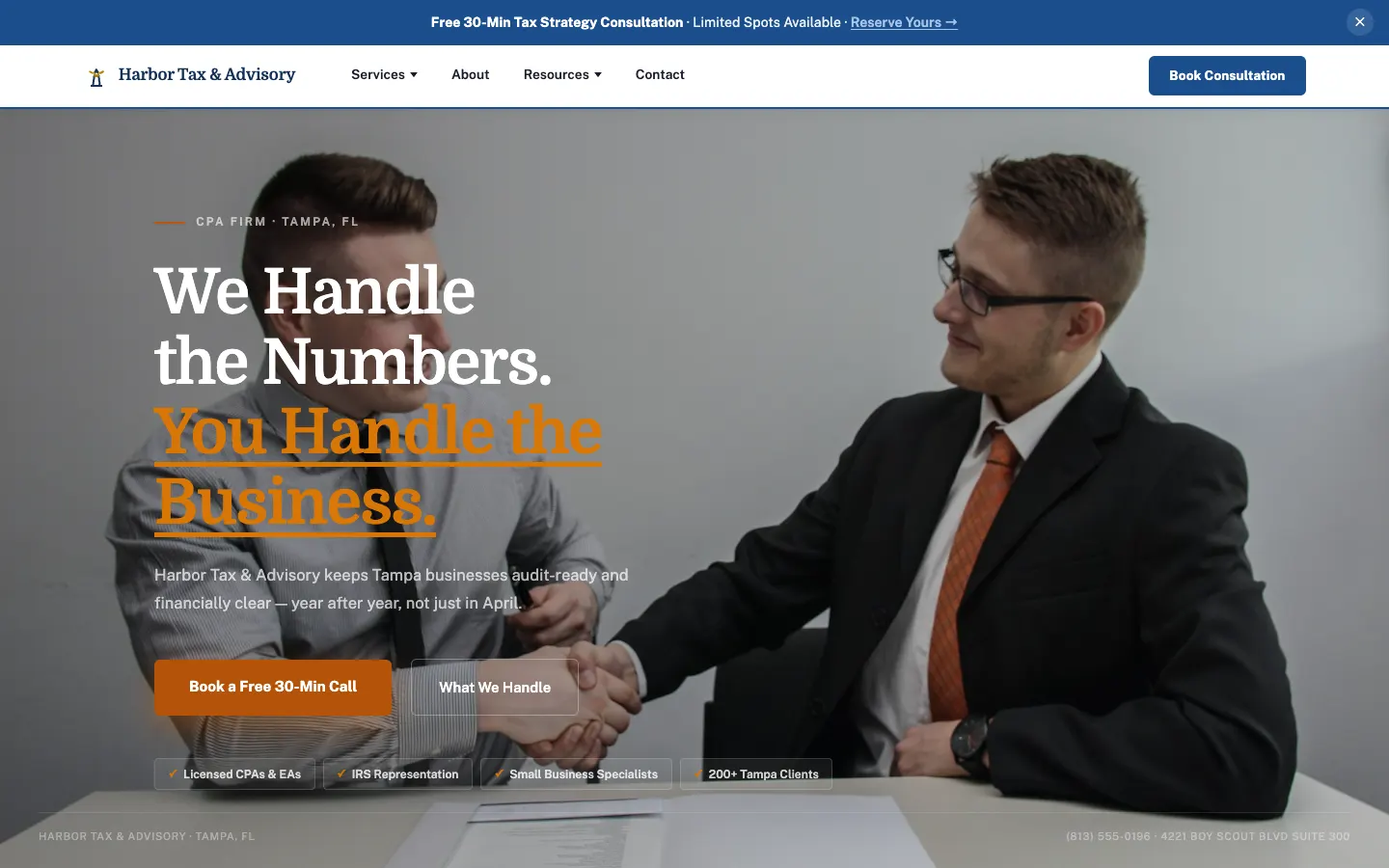
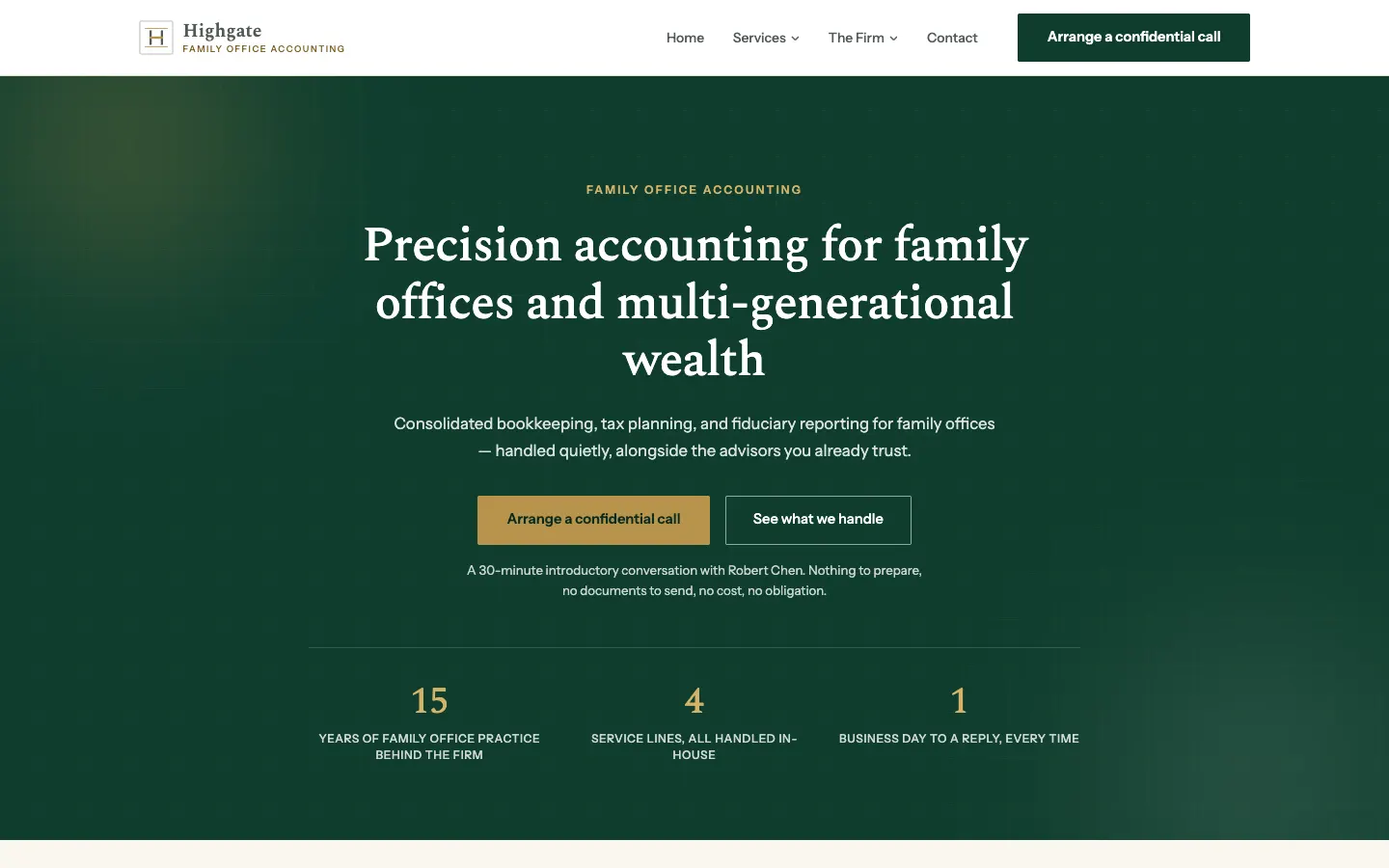
Open any of these and use it. They run on WorkspaceCMS, on their own domains, at the speed and structure a client gets. The businesses are invented, because these are demonstration builds rather than client sites.

Free website build
We build the site. You run it on a plan.
Start a 12-month WorkspaceCMS plan and we design and build your website from scratch at no cost. The build is included. The platform runs on a monthly plan, and the page count scales with the tier.
The Market
What Washington, D.C. actually runs on.
Federal spending anchors the region, but the visible economy is the orbit around it: prime and subcontractors, IT and cybersecurity firms, management consultancies, and the accounting and legal work that keeps them compliant. Buying decisions here are slower and more documented than in most metros, because the people making them are used to evaluating capability statements, certifications and past performance. A website that reads like a brochure loses to one that answers procurement style questions directly and shows how the firm actually works.
The second pillar is the nonprofit and association world. Trade associations, advocacy groups, membership organizations and think tanks are headquartered here in unusual concentration, and they market to members, donors, press and legislators at the same time. Content carries more weight than in most markets, because these audiences read. Digital PR and answer engine visibility matter for the same reason: journalists, staffers and researchers increasingly start with a search or an AI assistant rather than a rolodex, and the organization that has published a clear position gets cited.
Then there is the residential side, which is genuinely unusual. The population is highly educated, heavily renter, and turns over on political and academic cycles, so a large share of home services and consumer searches come from people with no local history and no neighbor to ask. They read reviews closely, compare three options, and expect online booking. Competition in local search is dense in the close in neighborhoods and thins quickly as you push into the outer suburbs, which changes what a realistic ranking target looks like by ZIP.
The Calendar
Political calendar on top of a real four season year
Two calendars run at once. The residential one is ordinary Mid Atlantic: heating calls from late fall through February, a heavy spring for roofing, gutters and exterior work after freeze thaw damage, and a summer cooling peak with high humidity. The institutional one follows the federal fiscal year, so procurement activity and B2B research climb through late summer toward the end of September, then reset. August is genuinely quiet on the professional side as the city empties, and January brings a burst of new staff, new leases and new household spending.
Where We Do The Most Work
Industries that matter in Washington, D.C..
Management Consulting
Consulting firms here sell into agencies, contractors and associations, where credibility is checked before a call. Content that explains methodology, clearances and past performance does more work than advertising.
Management Consulting marketingIT Services and MSPs
Cybersecurity and managed IT are core to the contractor ecosystem, and buyers search for compliance specific terms rather than generic support keywords. That gap is where most local IT sites lose qualified traffic.
IT Services and MSPs marketingHVAC Contractors
Genuine four season demand, older housing stock in the District, and a transient population that finds contractors entirely through search rather than referral. Service area setup across three jurisdictions is the hard part.
HVAC Contractors marketingProperty Management
A heavily renter metro with constant turnover keeps property managers competing for both owners and tenants. Those are two separate search audiences and most sites try to serve them with one page.
Property Management marketingServices
What we run for Washington, D.C. businesses.
Questions
What washington, d.c. businesses ask us first.
If yours is not here, a free strategy call is the fastest way to get a specific answer about your market and your numbers.
Book a Free CallHow should I handle a service area that covers D.C., Maryland and Virginia?
Treat them as three markets rather than one blob. Licensing, permitting and in some trades the rules on what you can advertise differ by jurisdiction, so a single page claiming the whole region reads as vague to both customers and search engines. We usually build distinct pages for the areas you are genuinely licensed and staffed to serve, name the counties and neighborhoods plainly, and keep the rest off the site. That is slower than listing fifty suburbs, but it holds up. It also prevents the common problem of ranking in a county where you cannot legally pull a permit.
Does content marketing actually work for an association or nonprofit here?
It tends to work better here than in most markets, because the audience genuinely reads and because journalists, congressional staff and researchers use search and AI assistants as a first stop. The organizations that publish clear, sourced positions get quoted and linked. The ones that publish press releases do not. We focus on the questions your members and the press are actually asking, structure pages so an answer engine can lift a clean paragraph, and pair that with digital PR. We do not guarantee rankings, and we do not promise placements.
Do you have an office in Washington?
No. 1Digital Agency has one office and it is in Miami, Florida. We have been in business since 2012 and work with clients across the United States and Canada, including the D.C. area, remotely. In practice that means video calls, shared reporting you can open any time, and a strategy team that knows the market rather than a rep who drives across town. If you want a local sales visit, we are not the right fit. If you want the work done well from anywhere, we are.
Why is local search so competitive inside the District but not further out?
Density. The close in neighborhoods have a high concentration of businesses chasing the same searches, plus strong national brands and franchise locations buying ads on top of them. Push into the outer Maryland and Virginia suburbs and the competitive field thins noticeably. That usually means two different plans in one account: a patient, content and reviews driven effort for the core, and a faster moving local pages and paid effort for the outer ring where you can win ground sooner. Setting one expectation for both is how budgets get wasted.
Selling online instead?
This practice is built for service businesses, firms, practices and B2B. If your revenue comes from an online store, the 1Digital Agency eCommerce team has run ecommerce SEO, paid media and platform work since 2012 and is the better fit.
Other Markets
We work across Florida and nationally.
Baltimore
Port logistics, hospitals and research, and rowhouse renovation, in a market where the block matters more than the city name.
Northern New Jersey
Pharma corridors, port logistics and dense suburban towns where residents search by town name, not by metro.
Atlanta
A corporate headquarters town where drive time defines a service area and professional services compete hard.
Grow your Washington, D.C. business with 1Digital.
We work with Washington, D.C. businesses from our Miami headquarters. Get a free audit and a written scope.